
Need a tree gone in or around Rogue River? Call (541) 507-9640 to reach a tree service at no cost. Your request goes to one outside tree contractor with a current Oregon CCB license. With the contractor on the phone, bring up a site visit and a price on paper. What happens after that is your decision. No one here cuts trees. The phone number simply routes your call to a contractor who does.
The rest of this page covers the local details that change a tree job here: city rules along Evans Creek and Wards Creek, county setbacks on the Rogue, summer limits on chainsaw hours, and how to check a company before anyone starts cutting.
How the free referral call works
The service is a phone number and a form that route your request to one independent tree company. You call (541) 507-9640 or send the form above. You say where the property is, what the tree is doing and what it is near. Your request lands with that one company. It holds an active Oregon CCB license, and the next contact comes from it. When it visits and what it charges are its own business. Most contractors do not bill for quoting a routine job, but get that confirmed early.
Nothing is owed to this site. The tree company pays the site a referral fee for calls and requests it receives. That fee is how the call stays free for you. You are free to turn down the estimate or get other bids.
This site does not inspect trees, quote prices, schedule crews or supervise any work. It does not employ anyone who cuts trees. Every agreement about price, timing and cleanup is between you and the company. The referral disclosure explains the arrangement in full, and how it works spells out the lone license lookup made on this end and the homework that stays with you.
A few details make the first conversation faster:
- The town or road, and whether you are inside Rogue River city limits
- The kind of tree, if you know it, and a rough height
- What it could hit: house, shop, fence, driveway, power line or creek
- Whether a truck can get close, or the tree sits down a slope or across a field
- Photos, if you can send them later
Signs a tree near Rogue River should come down
A tree usually needs a professional look when it is dead, leaning in a new way, splitting, or rotting at the base. One sign alone does not always mean removal. Several together, near something you care about, usually do.
Oregon State University Extension's guide to recognizing hazard trees after a fire, EM 9558, published July 2025, lists warning signs that apply to any tree: roots sprung from the soil or a fresh lean, hollow trunks, loose overhead limbs, broken trees held up by other trees, and conks or mushrooms that point to decay. It also says to think about targets. A cracked pine in the middle of a pasture is a different problem from the same pine over a bedroom.
Douglas-fir deserves a closer look in this part of Oregon. OSU Extension's Trees on the edge (EM 9406) describes the signs of decline in southwest Oregon firs: dying branch tips, branches that turn red and then gray, dead tops, thin or yellowing foliage, and a heavy crop of small cones near the top. It notes that small droplets of pitch in the bark crevices of a thinning tree mean it is likely to die within one to two years, and that bark shaved off by woodpeckers makes death almost certain.
Other signs worth a call:
- A deep crack in the trunk, or a split where two large stems meet
- Bare, dead limbs over a roof, deck, driveway or play area
- Soil heaving or cracking on one side of the base after wind
- Bark falling away in sheets, or sawdust at the base
- A tree that was scorched by fire, even if the needles look green
If you are unsure, a contractor who has seen the tree can say whether the tree needs to come down, needs pruning, or can be left. Good tree care sometimes means keeping a tree and pruning it, and the tree trimming and pruning page explains when that works. See the hazard tree removal page for more on how these calls get made.
What tree removal costs around Rogue River
Most single trees cost a few hundred dollars to about two thousand dollars to remove, depending on height, condition and access. Large trees near a house or power line can cost much more. Only the written figure from the contractor who sees your tree is a real price.
Published price guides do not agree with each other, because each one draws on a different sample of jobs. This page quotes Angi and HomeGuide. The Rogue River tree removal cost guide quotes Fixr and LawnStarter, which put a typical removal at about $385 to $1,100. Neither set is wrong, and none of them is a local quote. Use the ranges to judge whether an estimate is in a normal band.
The figures below are published averages, not local quotes. Angi lists a normal range of $200 to $2,000 for the Medford area on its page updated October 22, 2026. HomeGuide puts the national average range at $400 to $1,200 on its guide dated February 4, 2026.
| Job | Angi (updated Oct 22, 2026) | HomeGuide (Feb 4, 2026) |
|---|---|---|
| Typical single tree | $200 to $2,000 (Medford area range) | $400 to $1,200 (national range) |
| Tree up to 30 feet | $150 to $450 | $200 to $500 |
| Tree 30 to 60 feet | $450 to $1,200 | $500 to $1,500 |
| Tree 60 to 80 feet | $800 to $1,500 | $850 to $2,000 |
| Tree over 80 feet | $1,000 to $2,000 | $1,200 to $2,500 or more |
| Stump removal, per stump | $100 to $150 | $100 to $500 or more |
| Clearing land, per acre | $500 to $6,000 | $1,200 to $8,000 |
| Emergency removal | Up to $5,000 | 2 to 3 times the standard rate |
Several things push a Rogue River job up or down:
- Height and trunk size. Tall Douglas-fir and ponderosa pine take more time, rigging and cleanup.
- What is under it. A tree that can be dropped in open ground costs less than one that has to come down in pieces over a roof.
- Access. Long gravel drives, steep slopes and creek banks slow a crew and can rule out some equipment.
- Condition. Dead and fire-damaged trees can be brittle and harder to rig safely, so they do not always cost less.
- Cleanup. Hauling wood, chipping brush and grinding the stump are often priced separately.
- Fire season. Hour limits on saws in summer can stretch a job over more days.
Ask for an estimate that lists what is and is not included. The Rogue River tree removal cost guide goes deeper on reading a quote and lists ways to keep the price down.
City of Rogue River tree rules
Inside city limits, two chapters of the Rogue River Municipal Code matter most for tree work: the street tree chapter and the riparian protection chapter. Most trees in a private backyard away from a creek are not covered by a separate removal permit in the code, but confirm with the city before you plan around that.
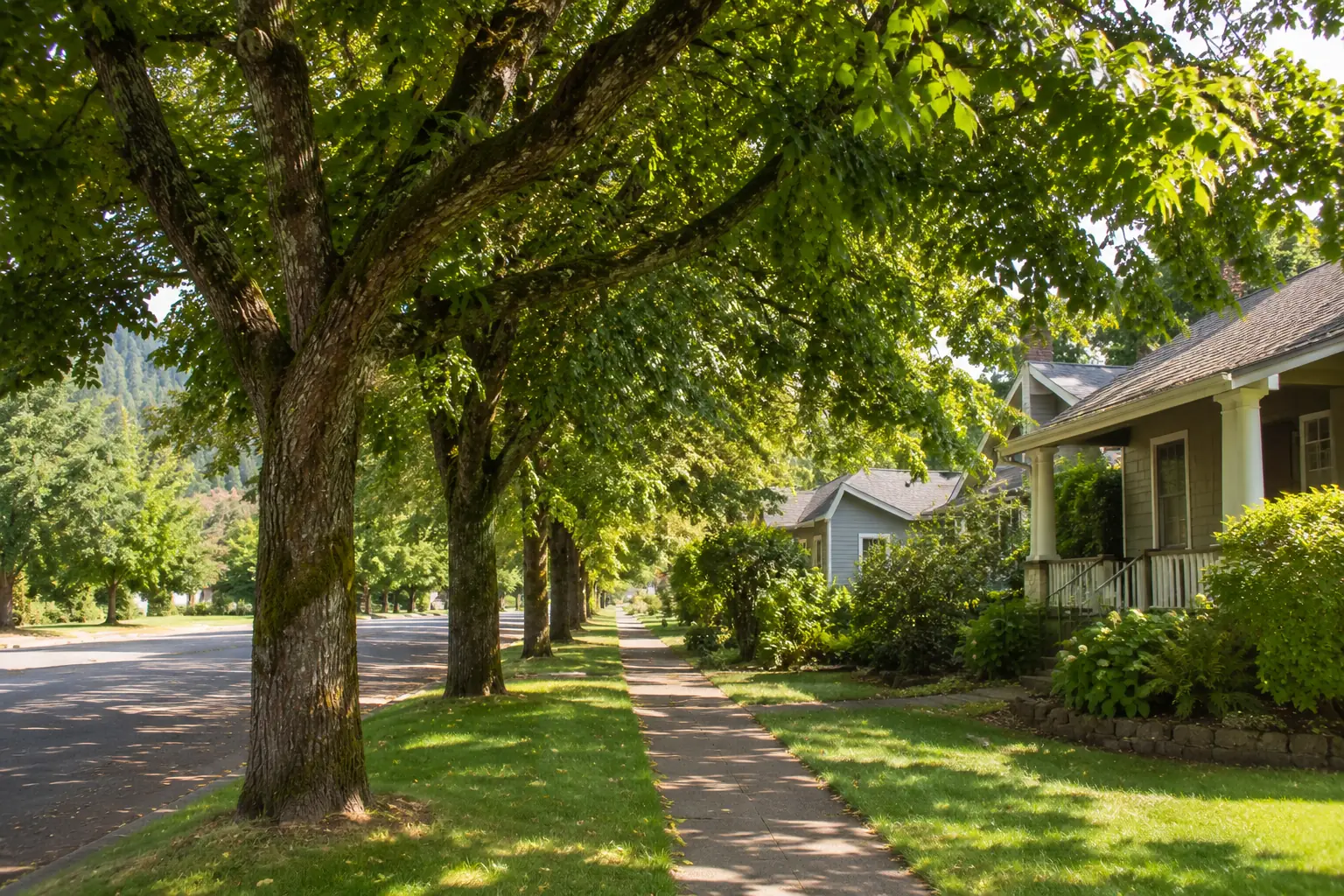
The street tree ordinance, Chapter 12.20, covers trees on land between the property lines on either side of city streets. Under it, planting or taking out any tree or shrub in a public parking strip or other public place takes the street tree committee's permission. Private owners carry duties too. When your tree overhangs a street or right of way, its branches must stay clear of street lights and intersections, leave eight feet of room above the sidewalk, and any dead, diseased or dangerous tree or limb that threatens the public has to go. The city may require an owner to remove or trim such a tree. If the owner does not act within 30 days of notice, the code lets the public works department do the work and lien the cost against the property.
That chapter also requires a city license for any business that prunes or takes out street or park trees in Rogue River, plus liability coverage of $2,000,000 or more with the city named on it. If your tree is in the parking strip, ask the company whether it holds that license.
The riparian protection chapter, Chapter 17.135, sets protected corridors along the water. Along the Rogue River, the protected strip reaches 75 feet inland from the top of each bank. Along lower-flow, fish-bearing streams such as Evans Creek and Wards Creek, it reaches 50 feet. Outside of emergencies, a hazardous tree in one of those strips cannot come out until the city has reviewed the request. That decision rests with the city administrator or a designee, who can ask the owner to pay for a professional arborist's opinion. Each tree taken out must be "replaced on a ratio of one to three" with native species, and the city follows up on whether the replacements live. The chapter also bars clearing riparian vegetation to create fuel breaks.
Rules change. Call Rogue River City Hall at (541) 582-4401, listed on the city's website, or start with the planning page before work in a parking strip or near a creek. The Rogue River tree rules guide has more detail.
Jackson County rules outside city limits
Past the city line, the governing code is Jackson County's Land Development Ordinance, and the part most likely to touch a tree job is its riparian section. A rural home set back from any stream generally faces no county permit for felling a tree on its own land. Confirm that with the county for your parcel.
Section 8.6 of the county's Land Development Ordinance requires that all vegetation and tree cover stay in place inside 75 feet of the Rogue River's top of bank, and inside 50 feet of the top of bank for Class 1 and 2 streams and any other waters with fish. Few exceptions exist. An owner may swap non-native plants for natives if the Oregon Department of Fish and Wildlife signs off on a landscape plan. Forestry allowed by the Forest Practices Act may also clear vegetation. The same section says no tree canopy may be removed to meet the county's wildfire fuelbreak rules inside that riparian area.
A plain-language summary of the county rules from the Jackson Soil and Water Conservation District adds that removing healthy trees in the setback needs prior approval and that a restoration plan is required when vegetation is removed. The full ordinance controls over any summary.
Jackson County Development Services lists its Planning division at 541-774-6907 on the department page. Call before you remove trees near a creek, pond or the river, or before clearing land for a new building.
Riverfront and creekside lots on the Rogue, Evans Creek and Wards Creek
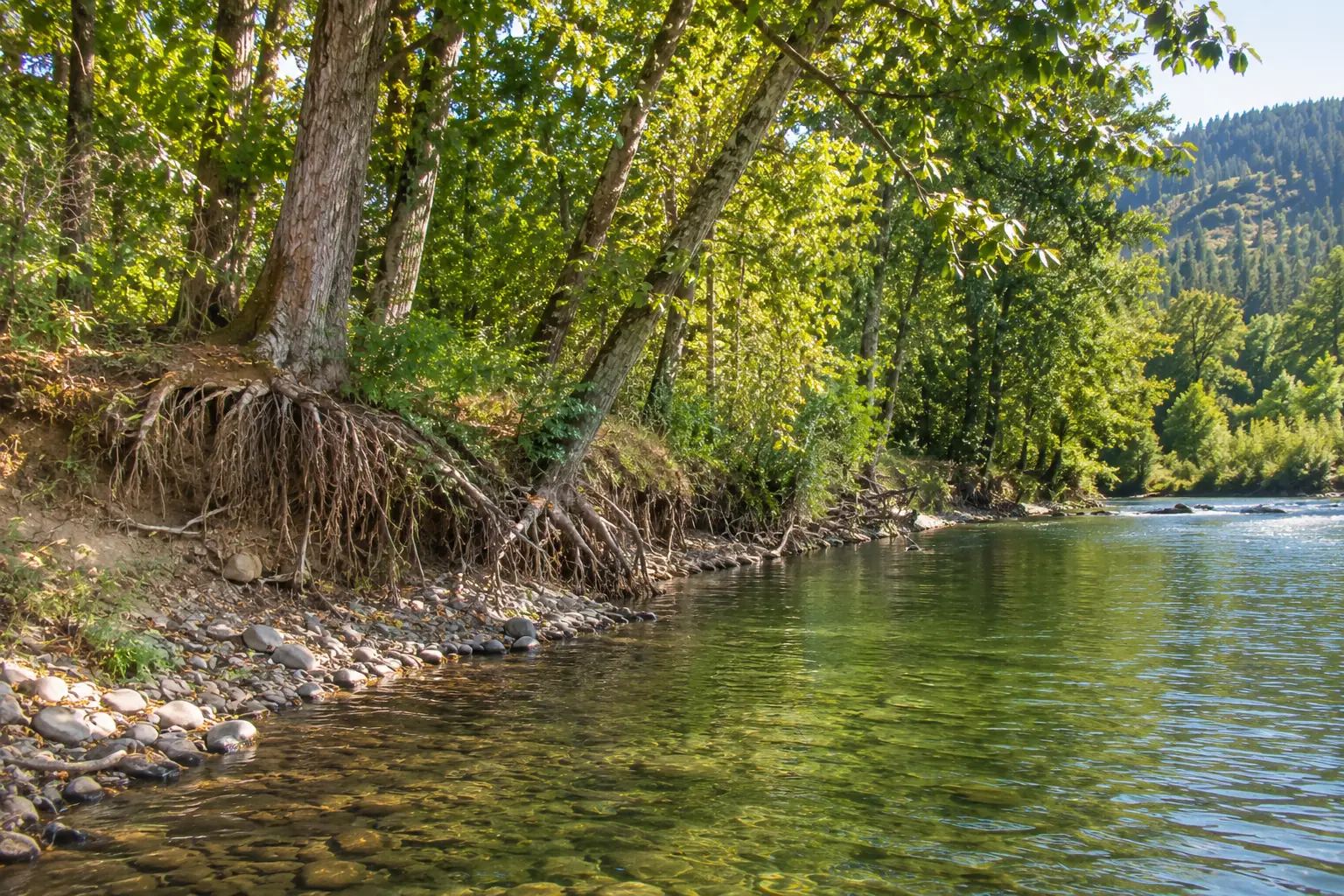
A tree near the water is the hardest kind of job to plan around here, because both the city and the county protect streamside trees and the bank itself. The short answer is to ask first. Get the city or county to confirm what is allowed before a saw comes out.
Inside the city, the riparian chapter bans filling, grading and excavating in the corridor, bans dumping yard debris there, and limits pruning so it does not harm a tree's health. It requires maintenance pruning to follow the ANSI A300 tree care standard. It lets downed trees stay where they lie, which matters if a company suggests dropping a dead tree and leaving the trunk rather than dragging it up a bank. The chapter also points owners to state and federal permits, including the Oregon Department of State Lands removal-fill law, when work touches the stream or its banks.
Creekside trees hold soil. OSU Extension's Guide to Native Streamside Trees and Shrubs of Jackson and Josephine Counties calls black cottonwood very common along lowland streams in both counties and well suited for bank stabilization. It notes that cottonwood re-sprouts vigorously from stumps and roots after cutting. Cutting a cottonwood near Evans Creek may not end it, and pulling the stump can loosen the bank.
Things to settle before any riverbank work:
- Where the top of bank is, and how far the tree sits from it
- Whether the tree is a true hazard to a home, road or people
- Whether a city or county approval is needed, and how long it takes
- Whether the trunk can stay on site, and how brush will leave
- How the crew will reach the tree without rutting the slope
The riverbank tree removal guide covers setbacks, erosion and who to ask in more detail.
Trees common around Rogue River and the trouble they get into
The trees that most often come down here are Douglas-fir, ponderosa pine, oaks, madrone and streamside hardwoods such as cottonwood. Each has its own weak points, and drought has made several of them worse.
Douglas-fir. OSU Extension's Trees on the edge reports about 260,000 Douglas-firs killed and nearly 150,000 acres affected in southwest Oregon from 2016 to 2019. It names Jackson, Josephine and Douglas counties and says most of the loss has been on rural residential land, small private woodlands and BLM tracts near the Rogue Valley. The main drivers are hot, dry sites, hotter drought and the flatheaded fir borer. The guide puts the highest risk on sites with under 35 inches of rain a year below 3,500 feet in elevation.
Ponderosa pine and incense cedar. The same guide lists ponderosa pine, sugar pine and incense cedar among the species that handle drought and heat better. The OSU streamside guide calls ponderosa pine a better choice than Douglas-fir for droughty sites in the region. A healthy pine can still fail from root damage, lightning or a broken top, and large pines near homes are common removal calls.
Oregon white oak and California black oak. OSU Extension's Not all flame's the same: Southwest Oregon (EM 9462) says Oregon white oak grows at lower elevations in the Rogue and Umpqua valleys. It also says that where fire has been kept out, conifers and shrubs have grown up and sometimes shaded out and killed oaks. Old oaks often drop heavy limbs as they decline.
Pacific madrone. OSU Extension's madrone forest health fact sheet (EC 1619) covers leaf disease, branch dieback, trunk cankers and root disease. Trees with cankers can decline quickly. Others persist for years.
Cottonwood, alder, ash and bigleaf maple. These grow along the Rogue and its creeks. The OSU streamside guide describes black cottonwood as fast growing and short lived, reaching over 150 feet on good sites. Big, fast trees next to a house or a driveway are a frequent reason people call.
Wildfire near Rogue River and the Evans Valley
Fire has come close to Rogue River twice in 2026, and both fires left trees that may need attention. Burned and scorched trees can fail months or years later, so they deserve a careful look before you decide.
The East Evans Creek Fire started on July 10, 2026, after a vehicle hit a power pole, and closed East Evans Creek Road at Meadows Road, according to the Oregon Department of Forestry's July 23 update. The Oregon State Fire Marshal reported that the Governor invoked the Emergency Conflagration Act for it, the first use of the Act in 2026. ODF's final update on August 5, 2026 listed the fire at 15,580 acres and 95 percent contained, with evacuations lifted. A month later, the City of Rogue River posted that the Fielder Mountain Fire began on the afternoon of August 13, 2026 near I-5 north of the city.
OSU Extension's guide Will my tree live? (EM 9557) says survival depends on three things: crown scorch, bark char and root damage. Thick-barked trees such as Douglas-fir, ponderosa pine and incense cedar usually need heavy crown injury to die. The guide warns that it may take several years for trees to die from fire injury, and that survivors become more open to insects and drought stress. Near a home or a road, it favors removing doubtful trees. Out in the woods, more risk is acceptable.
If you own burned land up Evans Creek or toward Sams Valley, the burned tree removal guide walks through what to look for and when to act.
ODF fire season rules for saws and equipment
Each spring through fall, ODF, the Oregon Department of Forestry, sets the hours when chainsaws and other gear that can throw sparks may run on or near land it protects in Jackson and Josephine counties. That changes how and when a tree job happens on rural property here.
ODF's Southwest Oregon District declared the 2026 fire season starting May 15. The 2026 regulated closure proclamation capped power saw hours, battery and electric saws included, like this:
| Danger rating | When saws may run |
|---|---|
| Low (green) | Any hour |
| Moderate (blue) | Mornings until 1 p.m., evenings from 8 p.m. |
| High (yellow) | Mornings until 10 a.m., evenings from 8 p.m. |
| Extreme (red) | Never |
On site, every saw needs a shovel plus an extinguisher holding eight ounces or more, and someone has to stay on fire watch for an hour or longer once the saw stops. The same proclamation applies hour limits to mowing dry grass and to cutting, grinding and welding metal, and it bans backyard debris burning for the whole season. Commercial tree companies may fall under ODF's separate industrial rules, so ask the company how it handles fire season.
ODF's district site, swofire.com, announced that the 2026 fire season ended October 28, 2026, after 166 days. Outside fire season, burning brush still has limits. The Evans Valley Fire District posts local fire season and burn information. Check with your fire district and the county burn line before you light a pile.
Winter storms and fallen trees
Heavy, wet snow is the storm most likely to bring trees down on lines and roads around Rogue River. Wind adds to it. Records from the last decade show a pattern worth planning for.
The National Weather Service office in Medford recorded a record daily snowfall of 8.3 inches at the Medford airport on January 3, 2017, with 6 to 12 inches common around the Rogue Valley, and listed power outages from heavy snow on trees among the impacts. On January 16, 2020, Pacific Power reported that heavy, wet snow knocked out power to about 18,000 customers, with outages stretching from Glendale to Mount Shasta to Rogue River, and said falling trees kept damaging lines. In early February 2025, Pacific Power said crews were working on more than 200 spans of downed power lines in southern Oregon and northern California, with downed trees blocking roads.
After a storm, take photos before anything is moved, call your insurer about what the policy covers, and keep everyone away from anything touching a wire. The storm damage tree removal page covers what to do first.
Trees near power lines and Pacific Power
If a tree or limb is on or against a power line, get 35 feet clear of the tree and the wire, and make 911 your first call. Pacific Power is the second call, at 1-877-508-5088, the number it posts for wires that are down. A tree company can only work once the utility has made the line safe.
For trees growing near lines, Pacific Power's vegetation management page says never to prune limbs or remove trees near power lines yourself, because contact with a line can be fatal. For that kind of non-urgent question it offers to send an arborist to look at the situation, at 1-888-221-7070. The utility does routine pruning to keep clearance at no cost to the customer and may remove trees that are a safety or reliability concern. It also offers a free temporary service disconnect when tree work has to happen near the line running to your house.
For trees near lines that the utility does not handle, such as a tree you want gone for your own reasons, you hire a private company. Ask whether its workers are qualified to work near energized lines, and whether it will coordinate a disconnect with Pacific Power first. Pacific Power's page also says to call 811 at least 48 hours before digging so underground lines can be marked. That matters for stump grinding and replanting.
Removal day on rural property
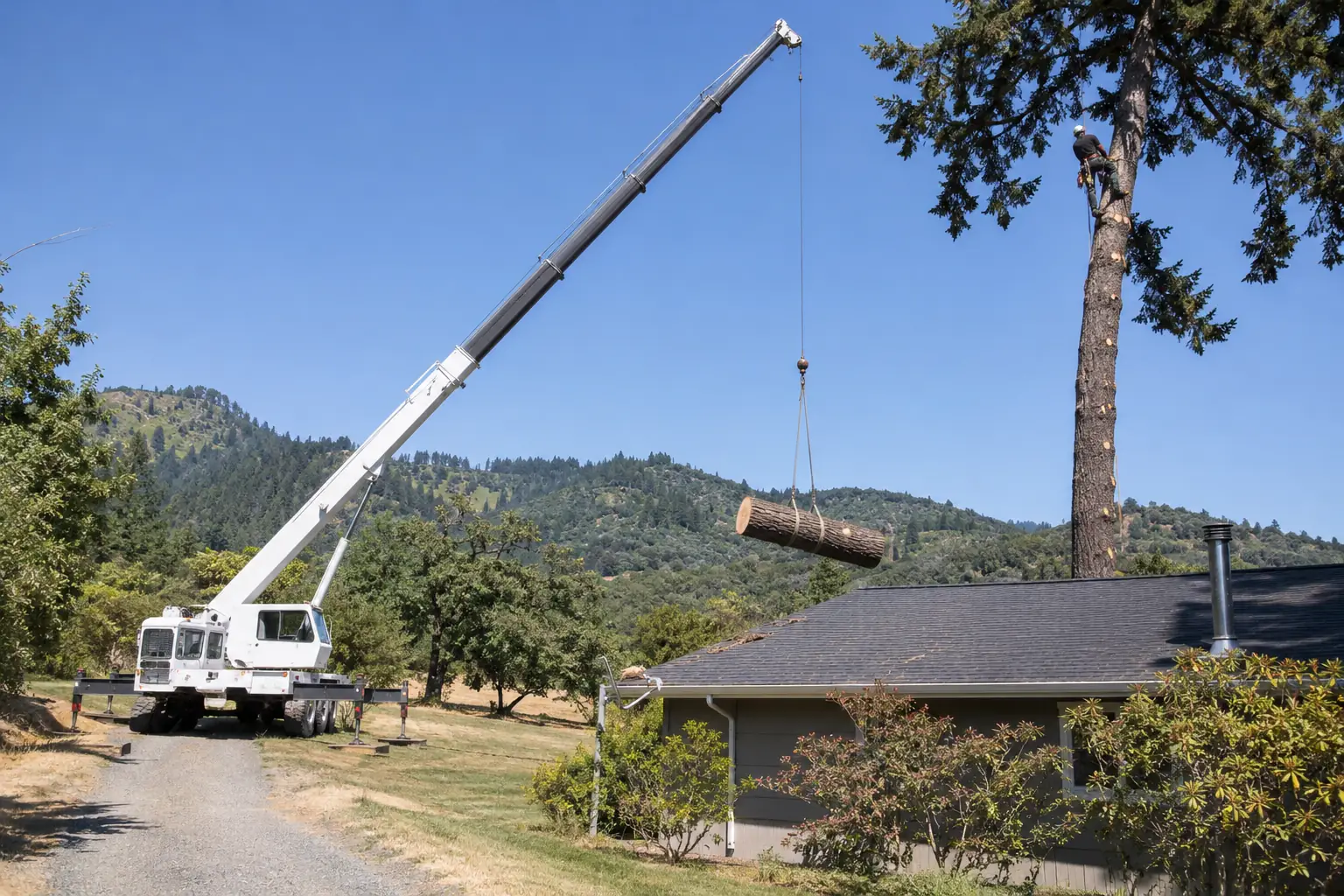
On acreage outside town, the job often depends more on access and timing than on the tree. Plan the path in and out before the crew arrives.
Talk through these with the company before the day:
- The driveway. Will a bucket truck, chipper or log truck fit down it, turn around, and get back up a wet grade in winter?
- Wells and septic. Mark the wellhead, the septic tank and the drain field. Heavy equipment and dropped logs should stay off the drain field.
- Fences, ditches and livestock. Gates may need to stay open, and animals may need to be moved.
- Wood and brush. Decide whether you want firewood rounds left, brush chipped, or everything hauled away. Debris burning is banned in fire season.
- Fire season hours. In summer, saw work may only run early in the day. A two-day job can become three.
- Selling logs. If timber from forestland will be sold, Oregon's Forest Practices Act generally requires a notice to ODF at least 15 days before work starts, filed through ODF's FERNS e-notification system. Check with ODF when in doubt.
The rural acreage tree removal guide covers access, long driveways, wells, septic and fire season limits in more depth.
How to check a tree company before you hire it
Check the company's license yourself, even when it came through this site. It takes a few minutes and protects you if something goes wrong.
- Look up the license. Request the CCB number and run it through the Oregon CCB license search. The CCB's consumer tools page says a license check shows whether the contractor is active and bonded, whether it has filed proof of liability insurance, whether it carries workers' compensation, and any complaints or discipline in the past 10 years.
- Know which license covers what. The Oregon Landscape Contractors Board's tree work FAQ says either a CCB or an LCB license allows tree removal and stump grinding.
- Get it in writing. The CCB says construction agreements over $2,000 must be in writing. Ask for a written estimate on any job, with cleanup, stump work and wood handling spelled out.
- Ask for proof of insurance. Get a certificate showing liability coverage, and ask whether workers on your property are covered for injury.
- Do not pay it all up front. The CCB advises never paying the full amount up front and not paying in cash.
If something goes wrong after the work, the complaints page explains where to take it.
Tree removal services covered here
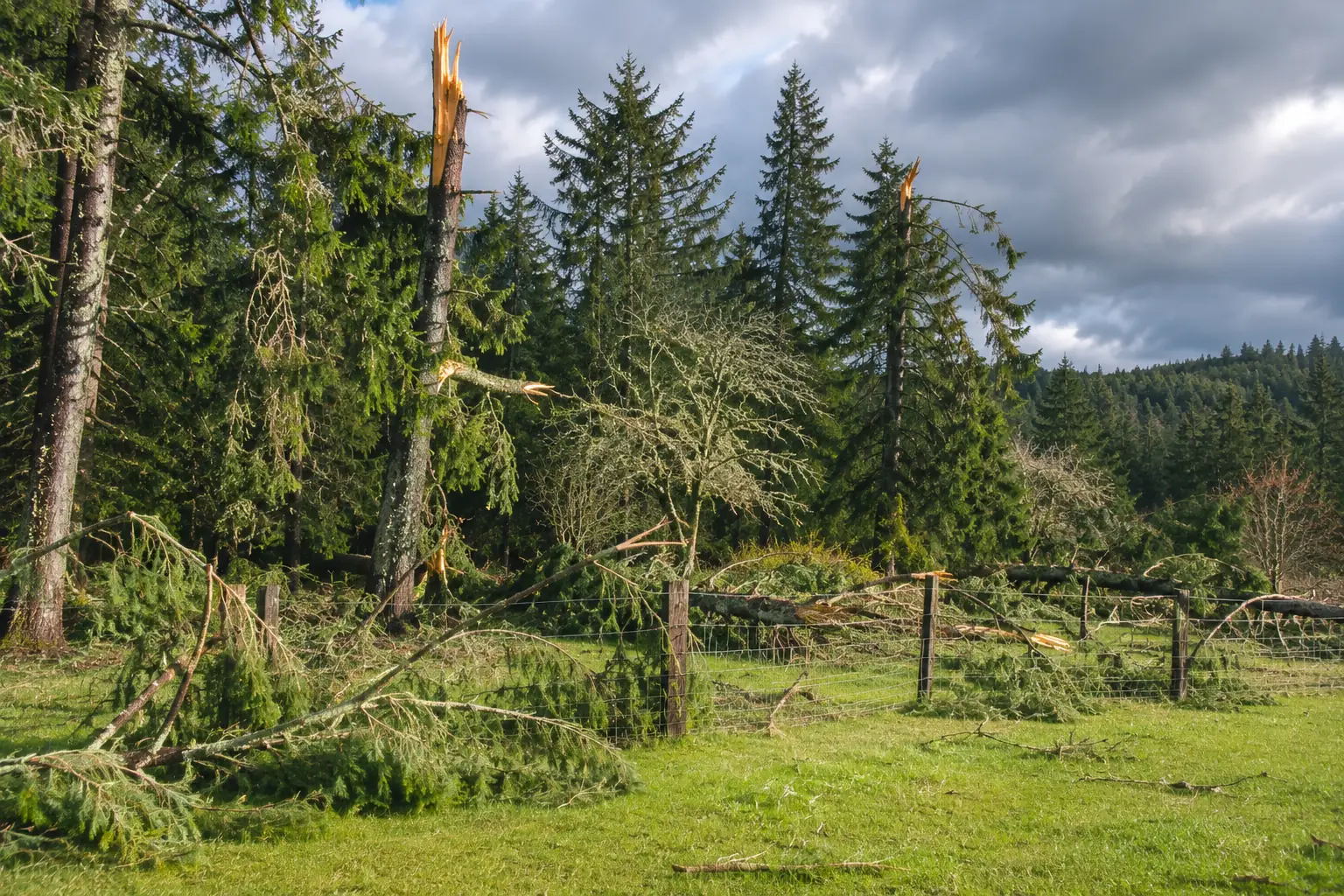
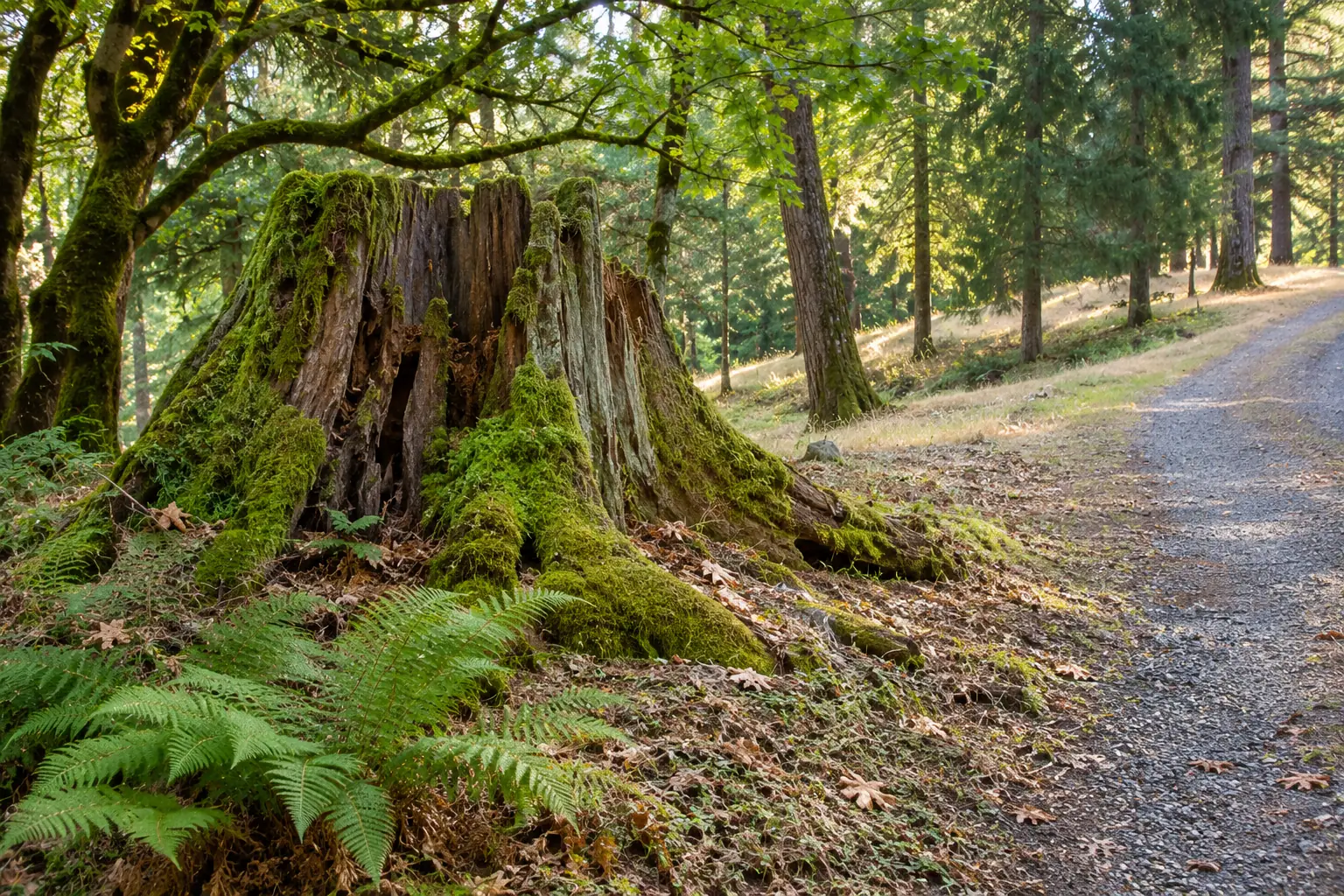
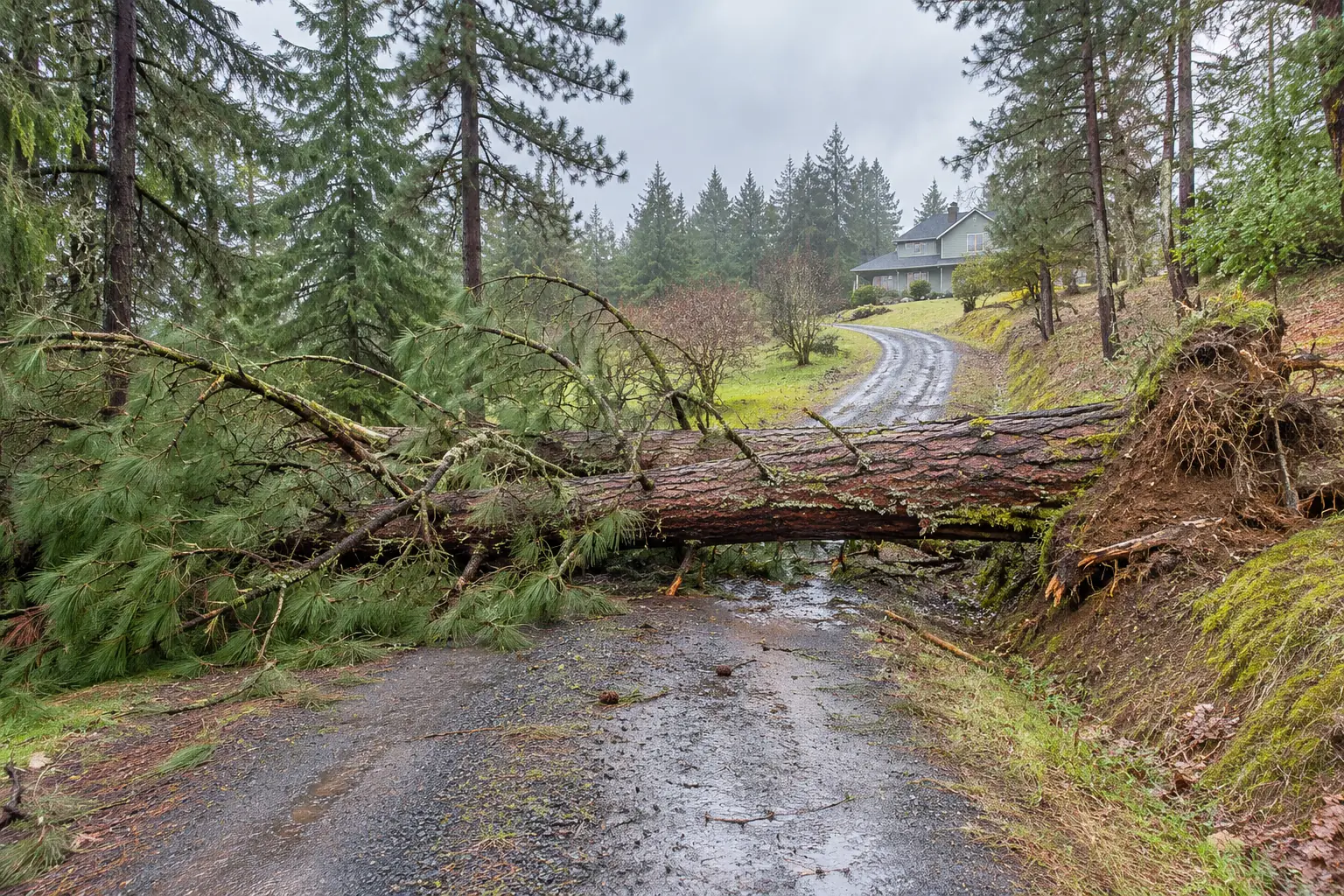
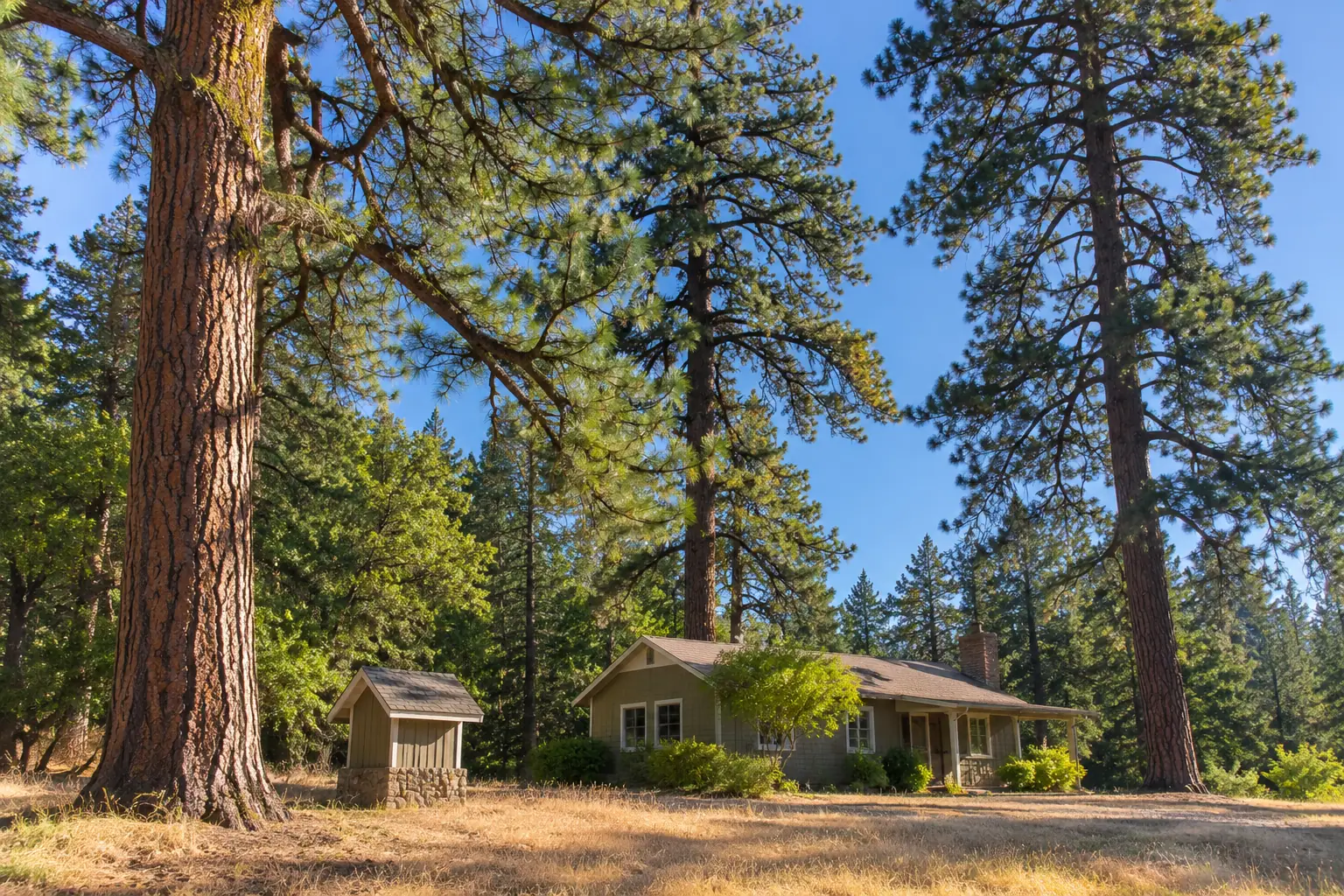
Calls to this number cover most tree problems a homeowner or landowner runs into around Rogue River. Pick the page closest to your situation.
Towns and areas covered
This number takes calls from Rogue River and the communities around it, including up the Evans Creek valley, along the Upper Rogue and west toward Merlin. Each town page covers what is different there.
Guides for Rogue River property owners
These guides go deeper on the rules and costs that come up most often in this area. Each cites its sources.
Frequently asked questions
Is this a tree company?
No. Tree Removal Rogue River is a no-cost referral service that routes calls. Phone (541) 507-9640 or use the form, and an outside tree contractor with a current Oregon CCB license gets your request. The contractor sees the tree, sets the price and handles the work.
Does the call cost anything?
You pay nothing for the call or the referral. A referral fee from the contractor funds this site. Quoting is the contractor's side. A routine quote seldom carries a fee, yet only the contractor can tell you so. You only pay the company for work you agree to in writing.
Do I need a permit to remove a tree in Rogue River?
In town, taking a tree out of a public parking strip takes street tree committee permission, and the city's riparian rules reach trees up to 75 feet from the Rogue River or 50 feet from Evans Creek and Wards Creek. Call City Hall at (541) 582-4401 to confirm before work.
What about land outside the city?
Under Jackson County's Land Development Ordinance, vegetation and tree cover stay put inside 75 feet of the Rogue River and 50 feet of fish-bearing streams, apart from a few exceptions. Call Jackson County Planning at 541-774-6907 for your parcel.
Can a tree be cut during fire season?
Yes, at most danger levels, during set hours. For 2026, ODF's Southwest Oregon District let power saws run until 1 p.m. and from 8 p.m. on at moderate danger, until 10 a.m. and from 8 p.m. on at high danger, and never at extreme danger. A shovel, an extinguisher and a one-hour fire watch were also required.
What will a Rogue River tree job run?
Angi lists $200 to $2,000 as the normal range for the Medford area as of October 2026, while the guides quoted in the cost guide put a typical removal at about $385 to $1,100. Sources differ. Large trees, trees over buildings and emergency work can cost more. Go by the contractor's written figure.
A tree fell on my power line. Who do I call?
Dial 911 first, from at least 35 feet off. Second, ring Pacific Power at 1-877-508-5088. No tree company touches the job before Pacific Power has finished with that wire.
Should I remove trees that were scorched in the East Evans Creek Fire?
A scorched tree is not always a dead tree. OSU Extension says survival depends on crown scorch, bark char and root damage, and that some trees die years later. Near homes and roads, doubtful trees are usually removed. Have a company or arborist look at each one.
How do I vet the contractor?
Get its CCB number and enter it in the Oregon CCB license search. Before anyone starts, have it show its liability coverage and hand you the estimate on paper.
Can I get more than one estimate?
Hiring the contractor this site sends is never required. Getting other bids is a normal part of hiring a contractor.