
Published national guides put a typical tree removal at roughly $385 to $1,100, with very large or emergency jobs running into the thousands. Around Rogue River, access, slope, nearby water and lines move the price most. Dial (541) 507-9640 and your details go to one CCB-licensed tree company, not a list of them. Request its written estimate, which is the price that counts.
Published price ranges, with sources and dates
The table below collects ranges from two national cost guides. They are averages drawn from many markets, not quotes for Rogue River, and the two guides do not always agree. Use them to judge whether an estimate is in a normal range, not to predict an exact bill.
| Item | Published range | Source | Last updated |
|---|---|---|---|
| Typical tree removal | $400 to $1,100, average $435 | Fixr | January 31, 2025 |
| Typical tree removal | $385 to $1,070, average $630 | LawnStarter | October 5, 2026 |
| Tree up to 30 feet | $150 to $400 | Fixr | January 31, 2025 |
| Tree 30 to 60 feet | $450 to $700 | Fixr | January 31, 2025 |
| Tree 60 to 100 feet | $900 to $1,200 | Fixr | January 31, 2025 |
| Tree over 100 feet | $1,300 to $2,000 | Fixr | January 31, 2025 |
| Emergency removal | $450 to $5,000 | Fixr | January 31, 2025 |
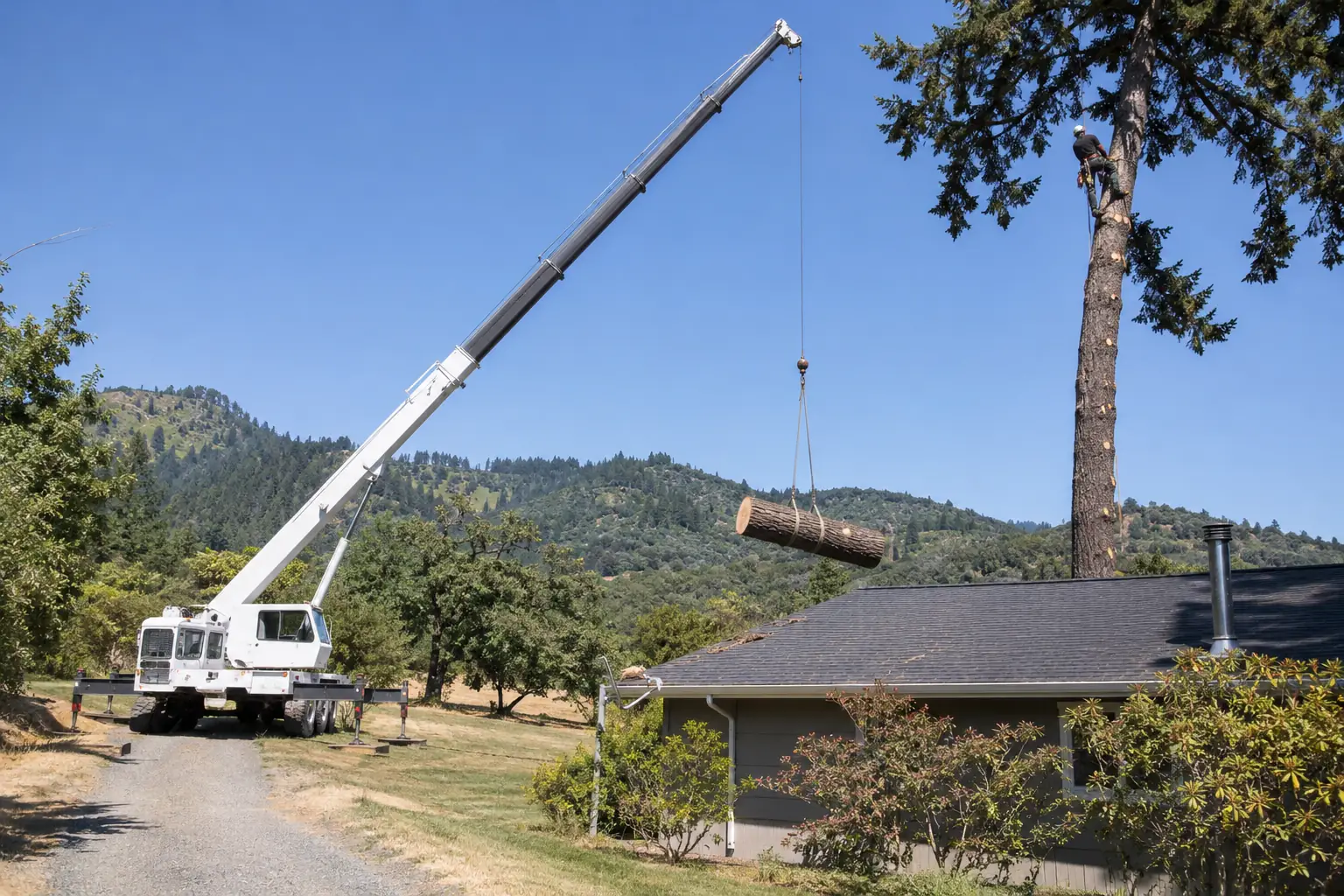
| Crane-assisted removal | $1,500 to $2,500 | Fixr | January 31, 2025 |
| Fallen tree | $85 to $300 | LawnStarter | October 5, 2026 |
| Stump grinding | $131 to $438 per job, average $272 | LawnStarter | October 5, 2026 |
| Debris removal after removal | $150 to $300 | Fixr | January 31, 2025 |
| Hauling debris | $50 to $90 | LawnStarter | October 5, 2026 |
LawnStarter also gives a per-foot figure of $10 to $14 and says trees that are hard to reach can raise the final bill by up to 50 percent. Fixr notes that emergency work can run two or three times the normal cost.
Why a national average misses most local jobs
National averages blend small backyard trees in suburbs with large trees in the country, so they land somewhere in the middle. A single 25-foot ornamental tree in town and a 100-foot fir behind a house on acreage are both "one tree" in those numbers.
If your tree is a tall conifer close to a home, shop or well, on a lot reached by a gravel drive, expect the job to sit toward the upper rows of the table. A short tree on open ground in town can land near the bottom.
What raises the price on Rogue River lots
The biggest price drivers are the size of the tree and how hard it is to reach and lower safely. These are the factors that most often change an estimate here:
- Height and trunk size. Taller trees take more cuts, more rigging and more cleanup.
- What sits under the tree. A roof, a well house or a fence means lowering pieces by rope instead of dropping them.
- Access. Long driveways, gates, narrow bridges, steep ground and soft winter soil can keep trucks and chippers away, which means carrying wood by hand.
- Septic fields. Keeping heavy equipment off the drainfield, as OSU Extension advises in Why do septic systems fail?, can lengthen the route and add labor.
- Power lines. Work near lines takes more time and may need a Pacific Power disconnect first. Pacific Power's tree page says it offers a free temporary disconnect of the service line to a home so professionals can work safely.
- Condition. Dead or decayed trees may not be safe to climb, which can mean a crane.
- Fire season hours. On ODF-protected lands, the 2026 Southwest Oregon regulated closure proclamation limits power saw hours at moderate and high fire danger and bans saws at extreme danger. Shorter working hours can stretch a job over more days.
- Emergency timing. Urgent work outside normal hours, where a company offers it, and work during storm surges cost more.
Ways to keep the price down
Several choices on your side can make a tree job more affordable, though none of them guarantees a lower price. The written estimate still sets the number.
- Get two or three written estimates. Companies plan the same tree differently, and the plan drives the price. The Oregon CCB's consumer tools page says construction agreements over $2,000 must be in writing, and it advises against paying the whole amount up front or paying in cash.
- Plan ahead of storm season. A dead or weak tree removed on a normal schedule avoids emergency rates. Fixr notes that emergency work can run two or three times the usual cost.
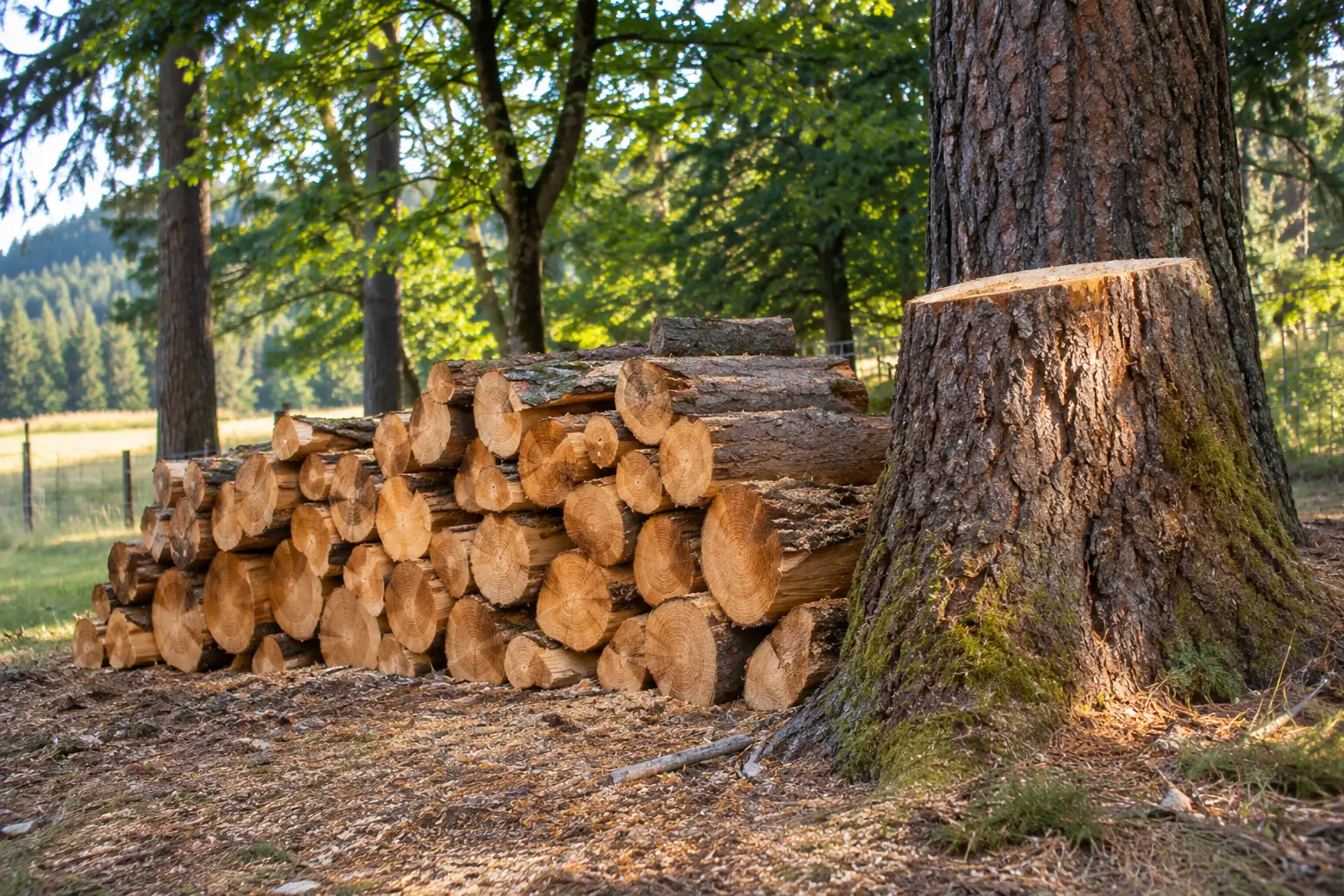
- Keep the wood. Having trunks left in firewood rounds instead of hauled away often reduces cleanup charges.
- Keep the chips. Chips spread on site, away from the house, cost less than chips trucked away.
- Skip grinding if you do not need it. A stump in a back pasture can be cut low and left to rot. Street and park trees are different: section 12.20.180 of the city's street tree ordinance requires those stumps to be removed below the ground surface.
- Group the work. Several trees, or a removal plus stump grinding, priced in one visit can cost less than separate trips.
- Prune instead of remove, when the tree is sound. A dead limb over the roof is cheaper to take out than the whole tree. The tree trimming and pruning page explains when pruning is enough.
- Schedule outside fire season. Full working days with no saw hour limits can shorten a big job.
- Clear the route. Moving vehicles, opening gates and marking the septic field before the visit saves time on the day.
Two free services are worth knowing about. Pacific Power's tree page says its crews prune around power lines at no cost to keep safe clearance, and that it offers a free temporary disconnect of the service line to a home so tree work can happen safely. None of that applies once a tree is touching a line. Price is beside the point then: get 35 feet away, dial 911, and phone the utility on 1-877-508-5088 afterward. The Oregon State Fire Marshal's defensible space page offers a free defensible space assessment, which can tell you which trees and brush actually matter for fire before you pay for clearing. No public cost-share program for private tree removal around Rogue River could be confirmed for this guide.
Approvals and replanting as part of the cost
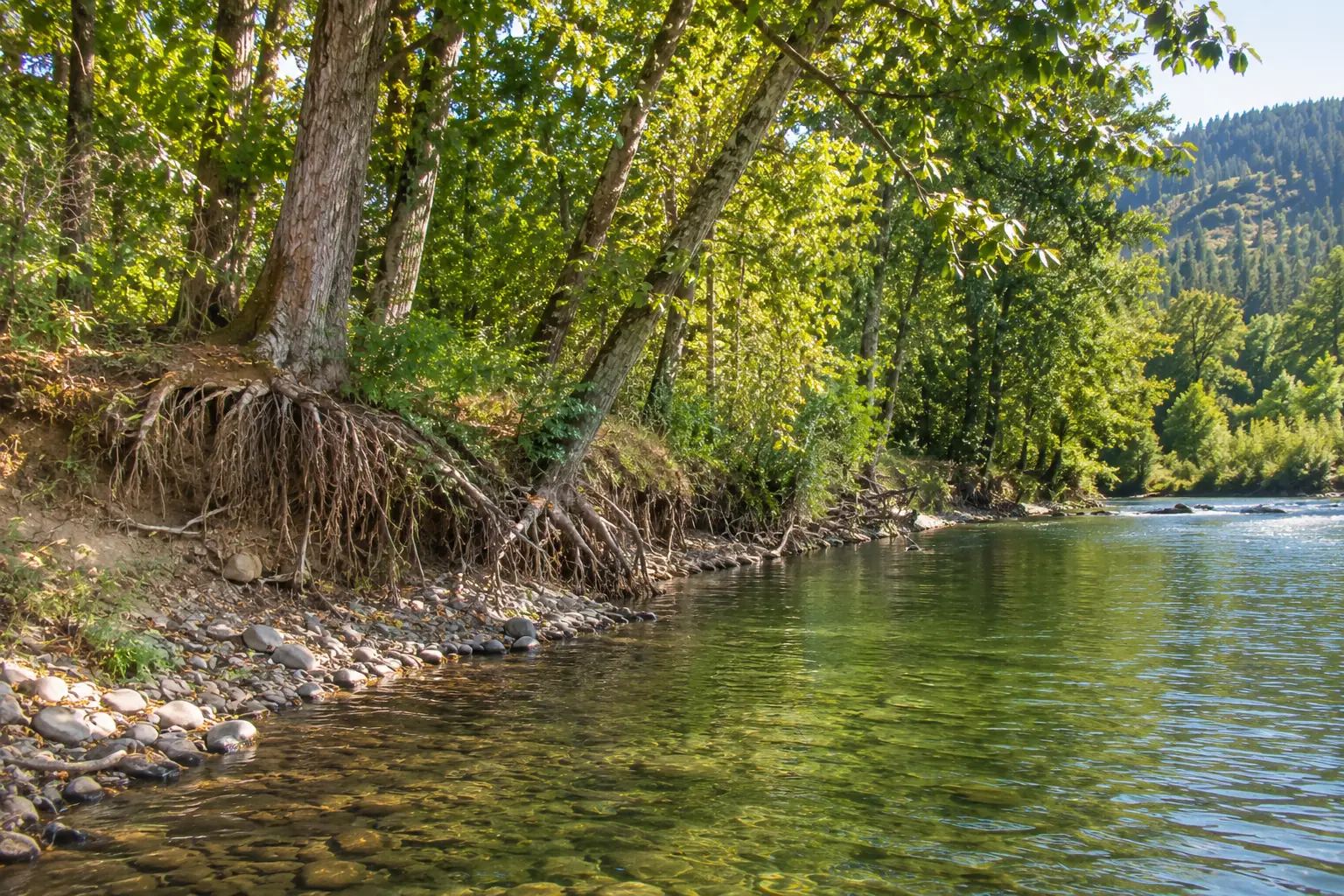
Near water, the cost of a removal can include approvals and replanting as well as cutting. The Jackson Soil and Water Conservation District's guide to the City of Rogue River riparian rules says removing vegetation inside the setback needs city approval, that native replanting is required, typically about one native tree or shrub per 64 square feet removed, and that hazard tree removal generally calls for replacement at about three to one. Erosion control is also required.
Those plants and the work to put them in are a real line in the budget. Ask the city or Jackson County what they will require before you compare estimates, and ask each company whether its price includes replanting or erosion control. The Rogue River tree rules guide and the riverbank tree removal guide explain those rules in full.
How to read a written estimate
The company's written estimate is the price that counts, so read it line by line before you agree. A clear estimate answers these questions:
- Which trees, by location or description, are being removed.
- Whether the price covers felling only, or also limbs, brush, chips and logs.
- Whether stump grinding is included, and to what depth.
- Who is responsible for any city, county or utility steps.
- What equipment will be used and where it will drive.
- What happens if the job turns out bigger than expected, such as hidden decay.
- How and when payment is due.
If two estimates differ a lot, the difference is usually in what they include. Compare them line by line instead of by total.
When a second estimate is worth it
A second written estimate is most useful on big or unusual jobs, where the method can vary between companies. One company may plan to climb and lower a tall fir by rope while another prices a crane, and both can be reasonable. Seeing two plans side by side shows you the tradeoffs in time, ground damage and price.
A second estimate helps most when:
- The tree is over the house or a line and the method is not obvious.
- The work sits inside a stream setback and replanting is part of the job.
- Many trees on acreage are involved, and access shapes the plan.
For a single small tree on open ground, one clear written estimate is often enough. In an emergency, making the site safe matters more than comparing prices, and the rest of the work can be priced once the danger is gone.
Checking the company behind the price
A low price from an unlicensed outfit can cost more in the end. The Oregon Construction Contractors Board lists tree servicing among the work that needs a license on its license page, and the Landscape Contractors Board's tree work FAQ says either a CCB or LCB license allows removing trees and grinding stumps.
Calling (541) 507-9640 connects you with an outside tree contractor with a current Oregon CCB license. You can confirm that yourself on the CCB license search before you sign. Ask for proof of insurance as well.
Costs for related work
Most removals come with a few extra decisions that affect the final number:
- Stump grinding. Priced per stump or per inch of diameter. See the stump grinding page.
- Emergency work. Usually priced higher. See the emergency tree removal page.
- Large and crane jobs. See the large tree removal page.
The home page lists every service covered here, and the brush and debris removal page prices cleanup on its own.
Frequently asked questions
How much does it cost to remove a tree in Rogue River?
National guides put a typical removal at about $385 to $1,100, with trees over 100 feet and emergency jobs costing more. Local factors such as access, slope and lines move the number. The written estimate from the company you are connected with is the price that counts.
Is the estimate free?
No charge applies to dialing (541) 507-9640 or to the referral. A fee for the estimate would be the tree company's doing. Routine jobs are mostly quoted without one, so check whether yours is any different. Hiring that company is your choice.
Why are two estimates for the same tree so different?
Usually because they include different things. One may cover hauling, chips and stump grinding while the other covers felling only. Compare estimates line by line.
Does stump grinding come with tree removal?
It may or may not be included, so ask. LawnStarter's October 5, 2026 guide puts stump grinding at $131 to $438 per job nationally. Ask for it as its own line on the estimate.
Do permits add to the cost?
They can near water. Inside the setbacks along the Rogue River and creeks, the city's rules call for approval and native replanting, which adds plants and labor. Confirm with the city or county what they require.