
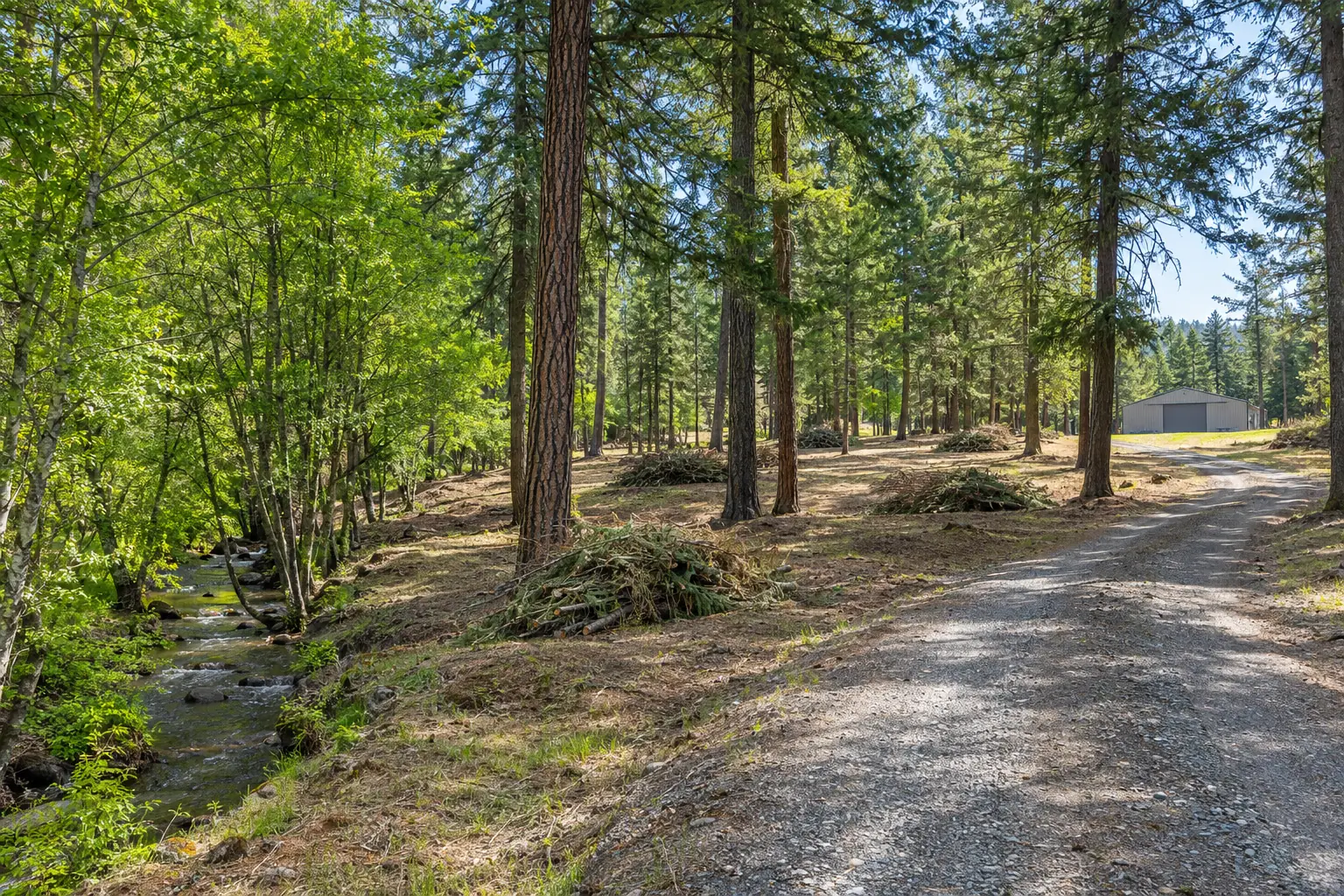
Land clearing near Rogue River removes the trees, brush and stumps standing where you want a house site, a driveway, pasture or a fire break. Creeks, the fire season and whether ODF treats the parcel as forest decide which rules apply. A free call to (541) 507-9640 connects you to just one tree service holding an active Oregon CCB license. Have it walk the ground with you and write its price down.
This site makes the connection and nothing more. Grading and building pads are often a separate trade, so ask whether the company does that work or an excavation contractor will follow. The home page explains the referral.
The pieces of a clearing job
An estimate for clearing bundles several separate tasks, so make sure you can see each one and its price. A typical acreage job draws from this list:
- Felling. Trees come down and get limbed, then cut into logs or stove-length rounds.
- Brush work. Manzanita, poison oak, blackberry and saplings are cut with saws or by machine.
- Mastication. A cutting head on a tracked machine grinds brush and small trees into mulch in place.
- Stumps. Each one is ground below grade, pulled, or cut low and left to rot.
- Disposal. Wood and brush are chipped, piled for a later burn, or trucked away.
Mastication suits much of the brushy ground here. OSU Extension's EC 1575, reviewed in 2025, says excavator-mounted Slashbuster heads are widely used on southwest Oregon brushfields and oak woodland and usually work slopes of 35 percent or less. It cautions that they fling wood and rock, so they suit ground roughly 100 feet or more from a house, and rates them unsuitable in streamside zones.
Mark the keepers first
Every tree you keep is one less to pay for. Before the estimate, tie flagging tape on the sound oaks, pines and madrone worth saving, shade trees near the house, boundary trees, and trees holding a bank or slope. Winter rain moves bare soil fast on these hillsides, so ask how the company will leave roots and stumps where the ground needs holding.
Creek setbacks under city and county rules
Ground near a creek or the river is where clearing most often needs a sign-off. Outside city limits, chapter 8 of Jackson County's Land Development Ordinance sets the terms:
- Under section 8.6.1, development of any kind, grading included, stays back 75 feet from the Rogue's top of bank and 50 feet from Class 1 or 2 streams and other fish-bearing water. The top of bank is the bankfull stage, where water starts spilling onto the upland.
- Section 8.6.2 keeps new roads, driveways and their fill out of that strip, apart from crossings.
- Section 8.6.4 says the vegetation and tree cover in the strip stays. Forestry work holding a Forest Practices Act permit is one of the listed exceptions, and the section adds that county fuelbreak rules do not justify cutting understory or canopy there.
Inside town, the city's riparian chapter, 17.135, draws the same 75 and 50 foot lines and names Evans Creek and Wards Creek. Unless the city approves, it prohibits filling, grading and excavating in the corridor, piling yard debris there, and clearing vegetation for fuel breaks. Development in the corridor needs a riparian development permit first, with a site plan and a construction plan showing how trees and soil will be protected, and the permit expires if work has not started within 180 days.
Before clearing anywhere near water, phone Jackson County planning at 541-774-6907, the number on its planning page, or City Hall at (541) 582-4401. The riverbank tree removal guide goes further into bank work.
Fuelbreak standards when you plan to build
A home site cleared now may have to pass a county fire inspection later, so clear to that standard once. Section 8.7.1 of the county ordinance calls for at least 100 feet of fuelbreak around new structures in areas on the Hazardous Wildfire Area Map, checked by a fire safety inspection before the building permit is issued.
In the inner 50 feet, grass stays below six inches, juniper is out, trunks stand more than 15 feet apart, and woodpiles and slash piles sit at least 30 feet from the building. The outer 50 feet thins fuel further. Near a creek, riparian rules still take priority. Ask county planning whether your parcel is on the map.
Fire season and big machines
Summer changes the schedule for clearing. ODF's 2026 Southwest Oregon proclamation, in force from May 15, 2026, sets daily hour limits by fire danger level for chainsaws, mowing of dry grass and any other spark-making engine it does not list separately, which covers most clearing equipment. Those engines also have to run on ground kept free of flammable growth for 50 feet around, with a charged hose or an extinguisher of 2.5 pounds or more at hand, and they stop entirely at extreme danger. The rural acreage guide lays out the hour limits level by level.
Bigger jobs can also come under ODF's Industrial Fire Precaution Levels, which climb from a fire watch at Level I, to restricted hours for saws and some machinery at Level II, to a full shutdown at Level IV. ODF's industrial fire season requirements add water and hose on site and a fire watch for two hours after machines stop each day. Call ODF's Medford Unit at (541) 664-3328 to learn which rules cover your project.
Telling ODF before you cut
Clearing forestland can be a regulated forest operation. Oregon's notification rule, OAR 629-605-0140, puts harvesting, converting forestland to some other use, slash treatment, pre-commercial thinning and firewood cut for sale or trade on the list needing notice. Firewood for your own stove, orchards and other farmed tree crops, and ornamental or street trees in an urbanized area are on the exempt list.
Notices are filed online in FERNS. According to ODF's notification page, the person in charge of the work, whether landowner, timber owner or operator, files at least 15 days ahead. That same system takes requests to use fire or power-driven machinery and forwards harvest notices to the Department of Revenue.
Turning woods into a homesite or pasture carries obligations afterward. ODF's FAQ page says changing the use is allowed, but the owner has to show county approvals, complete the new use within 24 months after the harvest and keep it for six years or more. Without that, replanting is usually required, and ODF lists fines of up to $5,000 for failing to reforest. Not sure your land counts as forestland? Ask ODF before cutting starts.
Locates before roots and stumps come out
Stump pulling, root grubbing and grading are excavation under Oregon's dig law. The Oregon Utility Notification Center's FAQ treats any moving of earth or rock as excavation, includes graders and bulldozers, and warns that dragging trees with heavy equipment can damage buried facilities.
The homeowner exemption covers only an owner or tenant digging under 12 inches deep on their own land, outside any easement, which most clearing work is not. File two full business days to 10 business days ahead; requests after 5 p.m. start the next business morning, and marks stay good for 45 days. Utilities mark only to the meter or the start of your private line, so lines to the well, pump house and shop are yours to locate. Settle who files the request when you hire. The stump grinding page covers buried lines near stumps.
Keep machines off the septic and away from the well
Flag the drainfield and the well before equipment shows up. OSU Extension's EC 1340 says vehicles, parking and building on the absorption field can damage it, and that roots can plug it. Route tracked machines, log trucks and chip piles around the field even if the path gets longer.
The Oregon Health Authority's private well fact sheet recommends housing the well and keeping chemicals out of and away from the well house, since one spill can foul your water and a neighbor's. On a clearing job, keep gas cans, bar oil and refueling well away from the wellhead. More on wells and septic is in the rural acreage guide.
Lot clearing costs
Clearing is usually quoted per acre, and how thick the growth is sets the rate. HomeGuide's land clearing cost guide, written November 20, 2025, reports these national averages:
| Density | Per acre |
|---|---|
| Light, with shrubs and small trees | $1,200 to $2,500 |
| Moderate, with thicker brush and mid-size trees | $2,500 to $4,500 |
| Heavy, with dense growth and big trees | $4,500 to $8,000 |
HomeGuide also gives forestry mulching at $500 to $1,000 or more an acre and grading a small, fairly level house site at $2,000 to $5,000. OSU's EC 1575 lists mechanical fuels work from $40 to over $600 an acre and says hauling a large machine in can make a small parcel uneconomic, unless neighbors pool their acreage.
Local factors that change the quote:
- Steep or rocky ground. Past about 35 percent slope, hand crews may replace machines.
- Getting in. Low bridges, tight gates and long gravel drives can keep heavy equipment out.
- Disposal. City code section 8.10.020, in the open burning chapter, bans burning land clearing waste in town at any time. For county land, DEQ's Southern Oregon outdoor burning guide states that state rules prohibit burning for land clearing. Ask DEQ's Medford office, 541-776-6089, before counting on a burn.
- Approvals and timing. Riparian permits, ODF notice and fire season hours all add days.
The written estimate from the company you reach is what counts. Disposal choices are compared on the brush and debris removal page.
Getting a clearing estimate
Dial (541) 507-9640 and your clearing request goes to one licensed tree company working around Rogue River, and to no one else. Find out early if it bills for coming out to price land. Routine quotes are usually free, and a big acreage job may or may not be, which only the company can say. Have the rough acreage ready, flag the keepers, mark wells, septic, buried lines and creeks, and know what the ground will become and where the logs, brush and stumps should go.
Check any license on the Oregon CCB license search. Dead or leaning trees are covered on the hazard tree removal page, and keepers that need limbing are covered under tree trimming and pruning.
Frequently asked questions
Will clearing my land need a permit?
That depends on the parcel. Work near a creek or the river probably needs city or county approval. Forestland may require ODF notice 15 days ahead. Building later can bring county fuelbreak standards. Start with the planning desk for your area.
Is burning the cleared brush allowed?
Not in town, where land clearing waste may never be burned. For county land, DEQ's guide says state rules prohibit burning for land clearing, and Jackson County allows no open burning in fire season. Ask DEQ and your fire district before you plan around a burn.
Do I tell ODF if I clear woods for a house?
Turning forestland into a non-forest use is on the state's notice list. File in FERNS at least 15 days before starting, and keep proof that the county approved the new use.
How near Evans Creek may land be cleared?
Both the city and the county protect the 50 feet nearest the top of bank on Evans Creek, and 75 feet along the Rogue River. Plants in that strip stay unless an approval says otherwise, and grading there is restricted.