Removing a tree within 75 feet of the Rogue River, or 50 feet of Evans Creek or Wards Creek, usually needs city or county approval and native replanting first. Hazard trees can be removed with approval, and emergencies can be handled first. Calls to (541) 507-9640 go to one tree company with a CCB license, and its price on bank work is worth getting in writing.
Why banks get their own rules
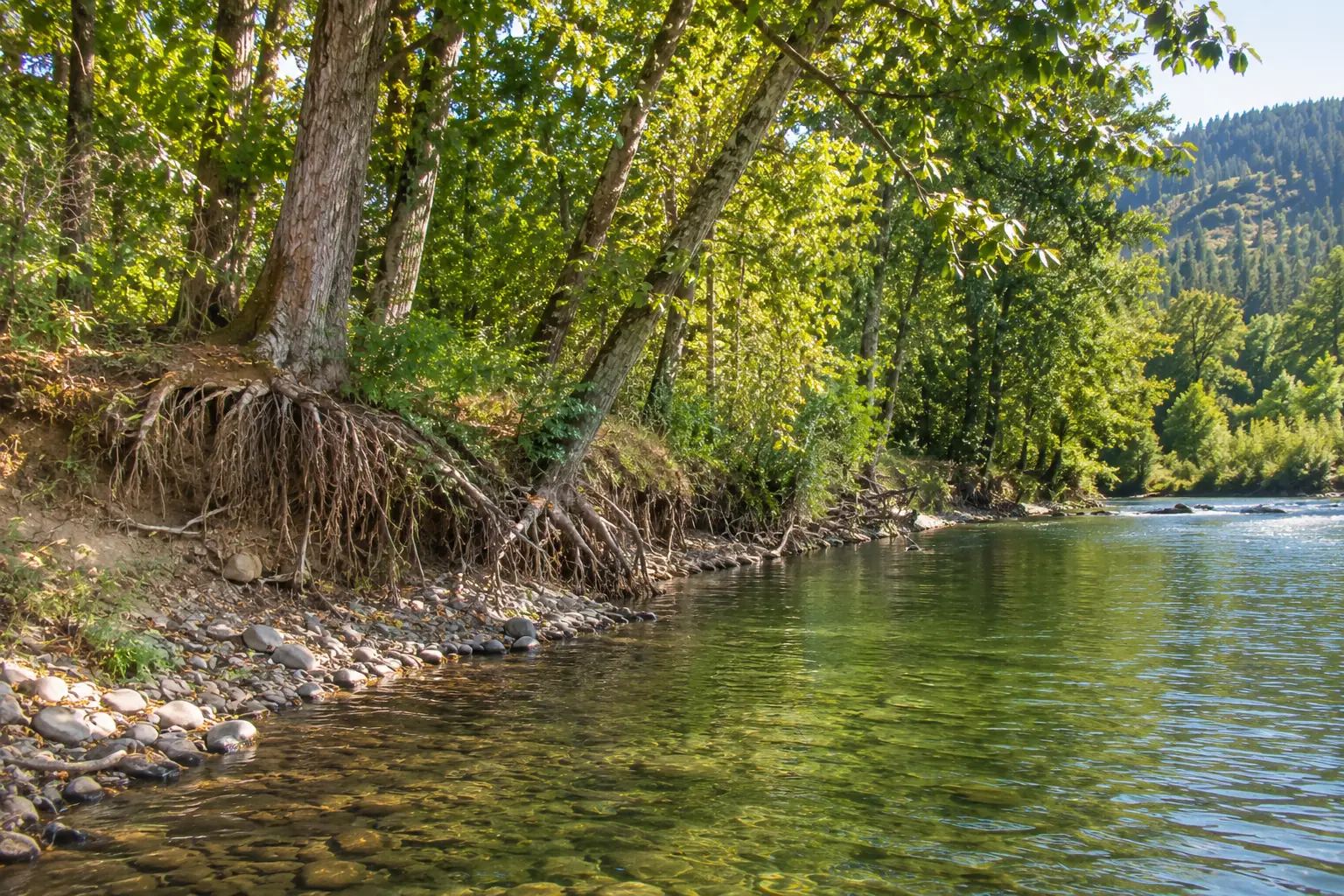
Trees and shrubs along a river or creek do jobs that a lawn cannot. Their roots bind the soil of the bank, their shade keeps water cooler, and the wood and leaves they drop feed the stream. Both the City of Rogue River and Jackson County protect a strip of land along waterways for those reasons.
The Jackson Soil and Water Conservation District's county building guide describes a setback as the required distance from a river or stream within which building or vegetation removal is limited. Its county vegetation guide says the setbacks protect water quality, reduce erosion and preserve habitat.
How far the setbacks reach
The setbacks are measured from the top of the bank, not from the water's edge. The Jackson Soil and Water Conservation District's guides give the same distances for the city and the county:
| Waterway | Setback from top of bank | Applies |
|---|---|---|
| Rogue River | 75 feet | Inside Rogue River city limits and in unincorporated Jackson County |
| Evans Creek, Wards Creek and other streams | 50 feet | Inside city limits (named in the city guide) and in the county |
The district's county building guide says top of bank generally means the upper edge of the streambank where the slope begins to level out, and that it is not always easy to identify. On a steep or terraced bank, ask city or county planning staff to confirm where it is before you measure.
Inside city limits: what the rules allow
Inside Rogue River city limits, vegetation in the riparian area must be kept by default. The district's guide to the city rules says clearing or thinning is not allowed unless the city approves it. With approval, the guide says these can happen:
- Removing nonnative invasive plants, such as Himalayan blackberry.
- Removing hazardous or dangerous trees.
- Approved restoration or landscaping.
Any removal requires native replanting, typically about one native tree or shrub per 64 square feet removed, plus erosion control. For hazard trees, the guide says removal is allowed when the tree poses an obvious safety risk, approval is required beforehand except in emergencies, and replacement is generally required with native species, typically at three to one. The city's rules are in Chapter 17.135 of the code linked from its municipal code page. The Rogue River tree rules guide covers the rest of the city code.
Outside city limits: Jackson County
Outside city limits, the county's riparian rules are spelled out plainly for healthy trees. The district's county vegetation guide says trees, shrubs and vegetation must be kept in place by default and lists removing healthy trees among the things not allowed without prior approval. Removing invasive species requires county approval, an ODFW-approved restoration plan and native replanting.
That guide does not address hazard trees by name. If a tree on a county bank is dying, leaning toward a house or undercut by the current, call Jackson County Development Services, Planning Division, at 541-774-6907, listed on the county's planning page, before it is cut. Describe the tree and what it threatens, and write down who you spoke with.
Fire clearing near water
Wildfire clearing does not cancel the stream setbacks. The district's county guide states that wildfire fuelbreak requirements do not override riparian protections, and that clearing riparian vegetation for fuelbreaks is not allowed, although perimeter mowing may be permitted where allowed. The city guide notes that lawn mowing may be allowed near the outer edge of the riparian area for fire safety, but not close to the water.
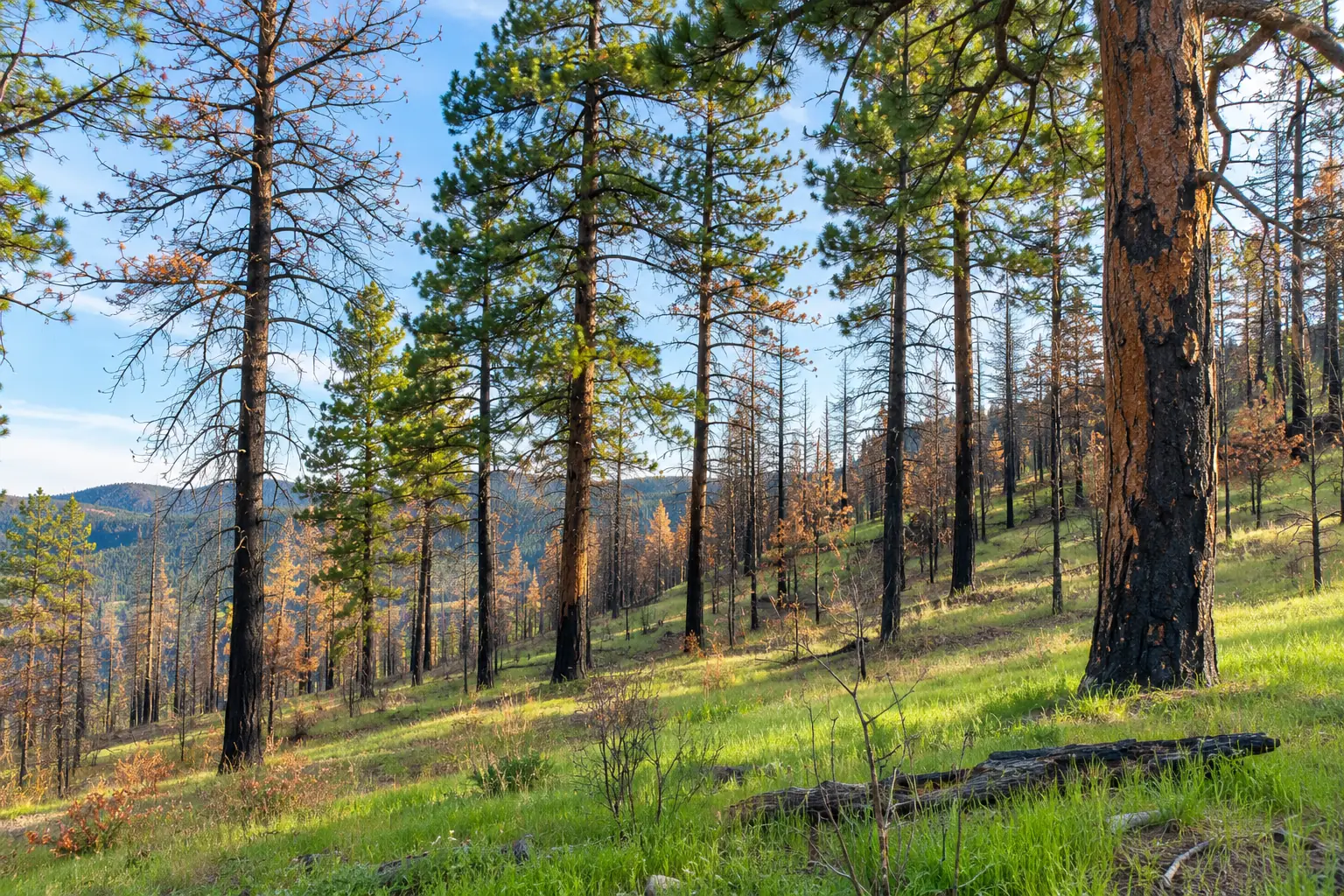
If you are working on defensible space on a creekside lot, talk with the city or county about the part of the yard inside the setback before any trees or brush come out.
Hazard trees on the bank
A tree on a bank can be a hazard in ways a yard tree is not. The current can undercut its roots, a flood can leave it leaning, and a soaked bank can let go under its weight. When a tree like this threatens a house, a deck or a path, treat it as you would any hazard tree, with the added step of approval.
Steps that work for most owners:
- Photograph the tree, the bank and what the tree would hit.
- Call the city or the county and describe the risk. Ask what approval and replanting they will want.
- Dial (541) 507-9640, request an estimate on paper, and share what the city or county said.
- Ask the company to cut only the tree that was approved and to protect the bank around it.
- Plan the replanting before the work starts, not after.
If the tree has already failed onto a structure or is about to, deal with the danger first. The emergency tree removal page covers the first hour, and the hazard tree removal page covers how risk is judged.
How bank work is done more gently
Work on a bank should leave the soil as intact as possible. These are reasonable requests to make of any tree company on bank work, and to check against what the city or county approves:
- Leave the stump and roots in place. Old roots keep holding soil for years. Grinding or pulling them can open the bank to erosion. The stump grinding page explains why bank stumps are often left alone.
- Lower wood away from the water. Pieces cut and lowered by rope do less damage than a whole tree dropped down the slope.
- Keep machines on top. Tracks and tires on a bank break the soil surface. The county guide lists placing soil, gravel or fill near streams among the things that need prior approval, so do not plan on building a ramp.
- Keep debris out of the setback. The county guide lists dumping yard debris or compost near streams among the things not allowed without approval.
- Avoid chemicals. Both guides say herbicides are generally prohibited or need approval inside the setback.
Trees that fall into the water
A tree that falls into the Rogue River or a creek raises questions beyond the bank. The district's guides list the Oregon Department of State Lands, under its wetlands and waters program, and the Oregon Department of Fish and Wildlife among the agencies involved in work near water. Before anyone pulls a fallen tree out of a channel, call the city or county and ask which agency to contact. If the tree is a danger to boaters or blocks flow toward a structure, say so when you call.
Who to ask first
The Jackson Soil and Water Conservation District is a good first call for plain answers, but it is not the agency that approves work. Its guides say it provides guidance only and does not issue permits. Its office is at 89 Alder Street in Central Point, phone (541) 423-6159, as listed on the city guide.
For approvals:
- Inside city limits: City of Rogue River, (541) 582-4401, listed on the city's planning page.
- Outside city limits: Jackson County Planning Division, 541-774-6907.
- Habitat review, when required: the Oregon Department of Fish and Wildlife, as named in the district's guides.
Replanting may need a different kind of license than removal. The Landscape Contractors Board's tree work FAQ says either a CCB or an LCB license allows removing trees and grinding stumps, but planting trees requires an LCB license. Ask the company you are connected with whether it can do the replanting or will refer it out.
What bank work costs
Bank work often costs more than the same tree in a flat yard, because pieces are lowered by rope, machines stay up top, and replanting is part of the job. Published national price ranges with their dates are in the tree removal cost guide. The company's written estimate is the number that counts. The home page lists everything this service covers.
Frequently asked questions
Can I cut a tree on my riverbank in Rogue River?
Usually only with approval. Inside city limits, the riparian rules within 75 feet of the Rogue River and 50 feet of Evans Creek and Wards Creek allow hazard tree removal and some other work with city approval, plus native replanting. Emergencies can be handled first.
What if the tree is dead?
A dead tree that threatens a house or path can be treated as a hazard tree. Inside city limits, that means city approval beforehand except in an emergency, and replanting. Outside city limits, ask Jackson County before cutting.
Do I have to replant after removing a bank tree?
Generally yes. The district's guide to the city rules says removal requires native replanting, typically about one plant per 64 square feet removed, and about three to one for hazard trees. Confirm the amount with the city or county.
Can I clear blackberries along Evans Creek?
Himalayan blackberry is a nonnative invasive plant, and removing it is allowed with approval. Inside city limits, the city approves it. In the county, removal needs county approval, an ODFW-approved restoration plan and native replanting.
Who measures the setback?
You can measure from the top of the bank, but the top of the bank is not always easy to identify. Ask city or county planning staff to confirm it on your property.