
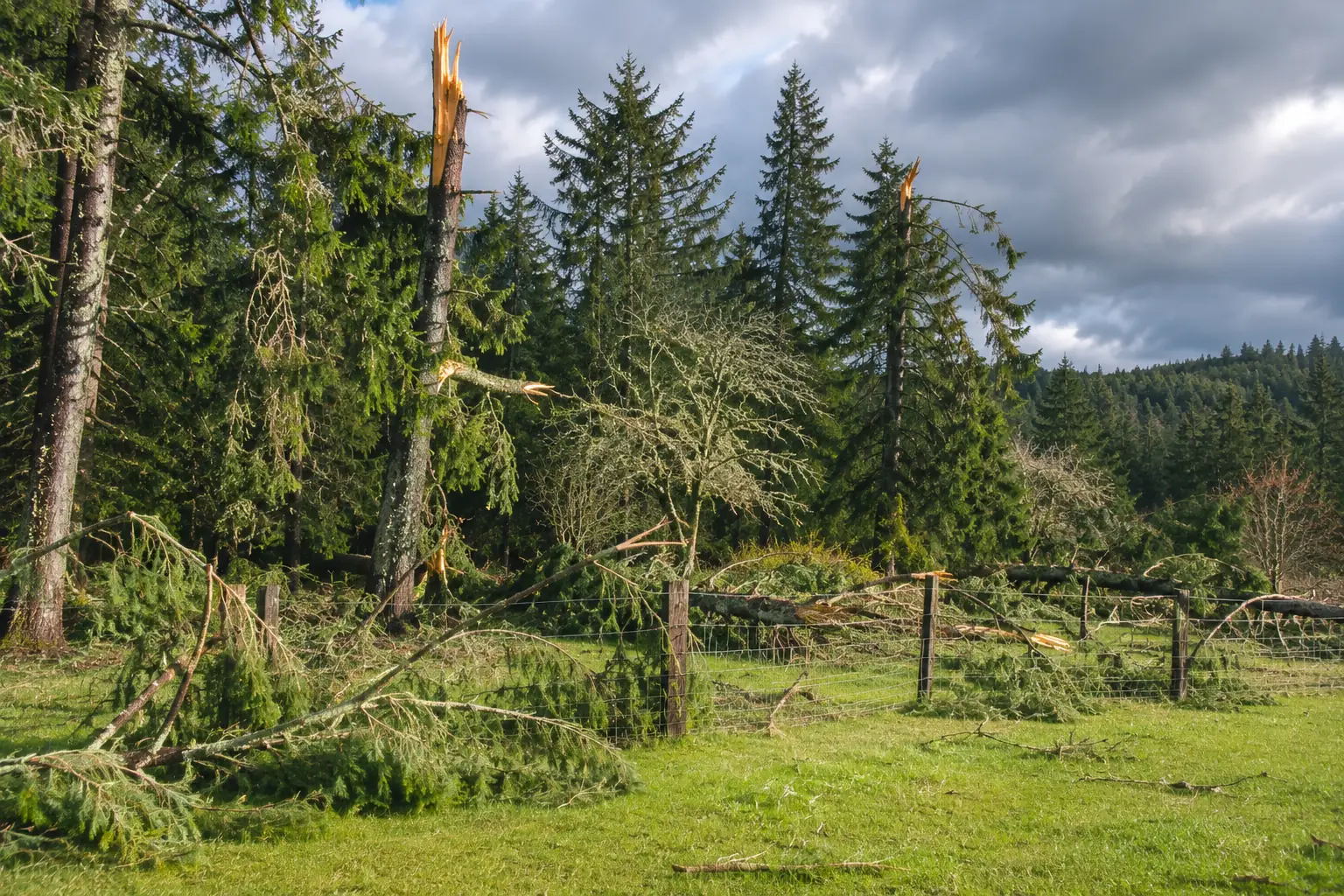
Storm damage tree removal in Rogue River starts with sorting the damage after a wind storm or heavy snow: trees on structures or wires first, split and hanging trees next, debris on open ground last. Any tree on a wire means 911 and Pacific Power ahead of every other call. Call (541) 507-9640 to reach a tree service. It is a single outside contractor with a current Oregon CCB license. Point out the storm-damaged trees you want seen and get an estimate written up. Routine storm quotes are seldom billed, though that is the contractor's to confirm.
Sort the damage before you pick up a saw
Storm cleanup goes faster and safer when you sort every damaged tree into one of three groups. Walk the property in daylight, keep away from anything touching a wire, and make a short list.
Call now. A tree resting on the house, the shop, a car or a fence. A trunk across the only way in or out. A tree that split or tore loose at the roots and now tips toward the house or a spot people use. A snapped branch dangling above the roof, the drive or the yard where kids play. Anything touching a power line, where 911 and Pacific Power are the first two calls. These match the emergency list on the emergency tree removal page, which covers the first hour in detail.
Book soon. A tree that cracked but is still upright and pointing away from buildings. A tree with several broken limbs still attached. A tree whose roots lifted slightly and then settled.
Clean up when it suits you. Branches and tops lying in a field, a fallen tree that hit nothing and blocks nothing, and piles of small limbs. None of this is an emergency, and it often costs less when it is priced as part of a planned visit.
Kinds of storm damage and what they mean
The way a tree broke tells a tree company a lot about what else might fail. Point out these patterns when the company comes out.
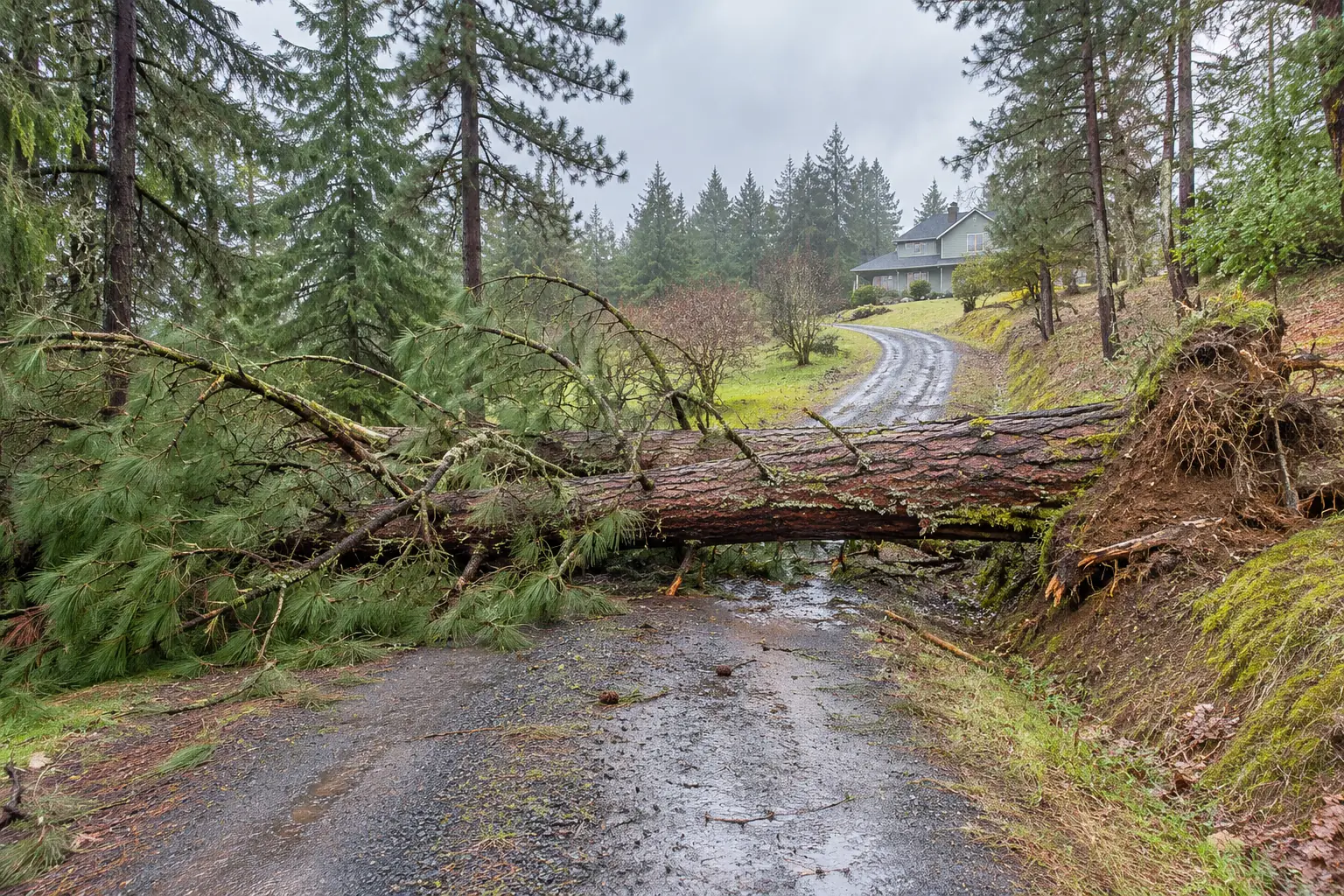
Wind throw
A tree that tipped over with its root plate lifted out of the ground is called wind thrown. When one tree in a group goes over, the trees that stood behind it are suddenly exposed to wind from a new side. Ask the company to look at the neighbors of any tree that came down this way.
Snapped trunks and tops
A trunk that broke partway up often broke at a weak point, such as decay, an old wound or a seam. The standing part may have the same weakness lower down. A tall conifer that lost its top in a storm can also send new tops up from the break, and those tops are often weakly attached.
Split forks
Trees with two trunks in a tight V can split down the middle under wind or snow. A partial split is dangerous because the two halves can separate further without warning.
Hangers
Broken limbs caught higher in the crown are called hangers. They can stay put for days and then drop in a light breeze. Keep people and vehicles out from under them until they are down.
Root damage from saturated soil
When the ground is soaked, roots hold less firmly. A tree that rocked in a storm may have torn roots even if it looks upright. Cracked or heaved soil around the base is the clue.
Watching the weather before and after
The National Weather Service office in Medford issues the forecasts, watches and warnings for the Rogue River area. Checking it before a forecast wind event gives you time to move cars, close up outbuildings and keep people away from the biggest trees near the house.
After a storm passes, check the forecast again before cleanup starts. A second round of wind can bring down hangers and cracked trees that survived the first.
Storm-damaged trees near power lines
When storm damage involves any overhead line, the tree company is third in line. Dial 911 from 35 feet off. Once that is done, report the downed or damaged line at 1-877-508-5088, the number on Pacific Power's outages and safety page. The utility works first and the tree company second.
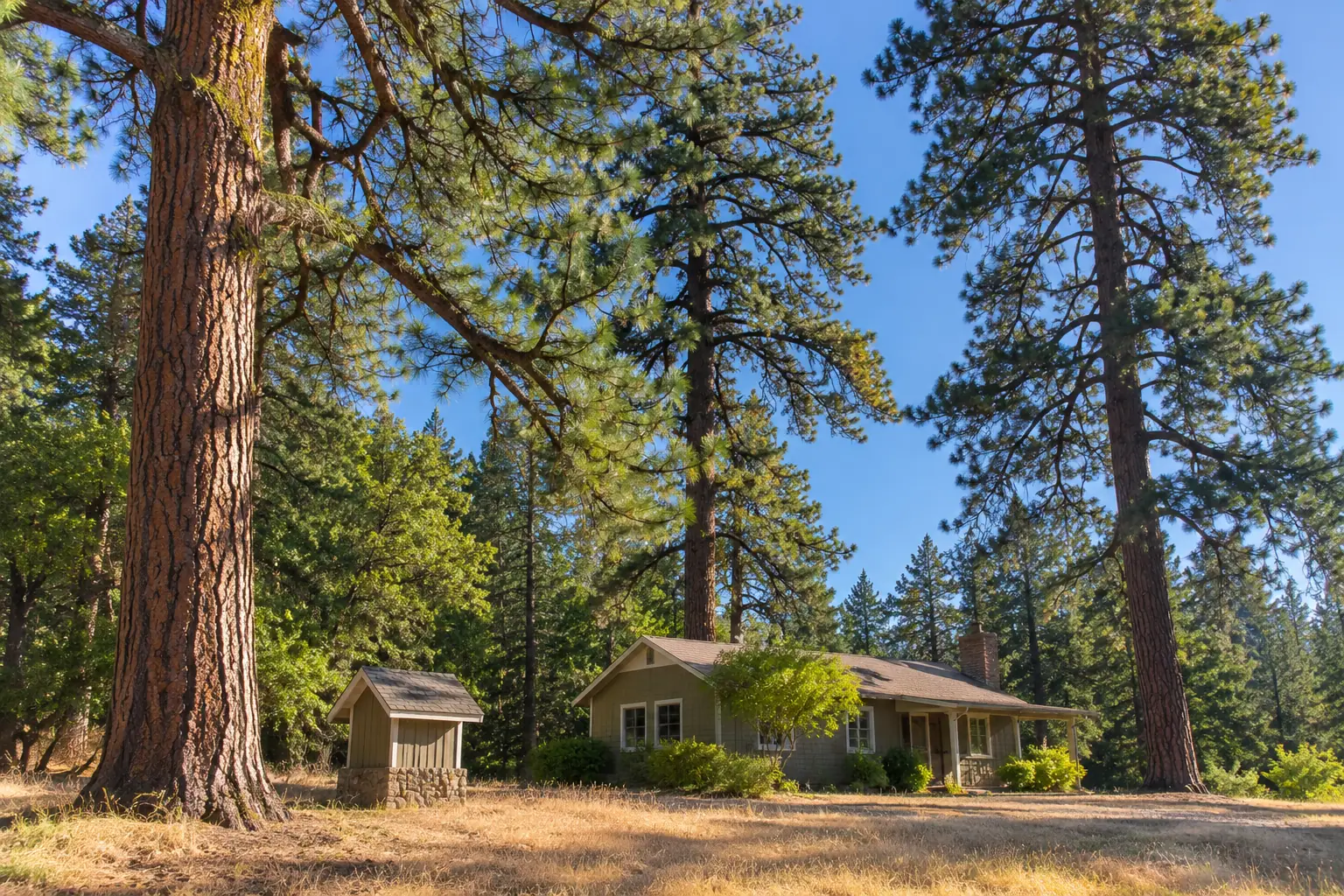
For trees that are close to lines but not touching them, Pacific Power's tree page says customers should never prune limbs or remove trees near power lines, and offers an evaluation by an arborist the utility sends. It also says the utility can provide a free temporary disconnect of the service line to a home so professionals can work near it safely. Mention any of this when you call (541) 507-9640.
Photos and paperwork for insurance
Good photos taken before cleanup make an insurance claim much easier, so take them first. Insurers handle tree damage differently, and many treat a tree that hit a covered structure differently from one that fell in the yard. Call your insurer and confirm what your policy covers.
A simple record that covers most questions:
- Wide photos of each fallen or damaged tree showing where it stood and what it hit.
- Close photos of the break, the stump or the root plate.
- Photos of damage to the roof, siding, fence or vehicle.
- The date and time the tree came down, and a link to the weather warning in effect, if any.
- The tree company's written estimate and, later, its invoice.
Where storm debris can and cannot go
Storm debris has a few local limits around Rogue River. Plan for them before the brush pile grows.
During fire season, backyard debris burning is prohibited across lands protected by the Oregon Department of Forestry's Southwest Oregon District. The district's 2026 regulated closure proclamation states this ban applies throughout fire season. Outside fire season, check current burn rules before lighting a pile. ODF's fire restrictions page links to the burn information for each area.
Near water, debris needs a different plan. The Jackson Soil and Water Conservation District's Jackson County guide lists dumping yard debris or compost near streams among the things not allowed without prior approval. Keep storm brush out of the setback along the Rogue River and creeks, and ask the tree company to haul it, chip it or stack it well back from the bank.
Common choices for the wood itself:
- Have the company chip brush and haul it away.
- Keep chips on site for paths or mulch, away from the house and well back from creeks.
- Have trunks cut to firewood length and stacked, if you burn wood.
- Ask about leaving larger logs in place on acreage, where they can rot down away from buildings.
Storm cleanup on acreage
Storm damage on a few acres often means many trees at once, some of them far from the house. Prioritize trees that threaten structures, fences, the well house and the driveway, and leave trees down in open woods for a later visit.
Access can be harder after a storm. Wet ground, washed-out culverts and fallen trees on the drive can keep a truck from getting near the work. Tell the company about each of these when you call. The rural acreage guide covers access, wells, septic and fire season limits on equipment.
Getting an estimate for storm work
When you call (541) 507-9640, you are connected with an outside tree contractor with a current Oregon CCB license. Pricing is the company's side of things. Storm estimates are often free for ordinary cleanup, though you should confirm that before the visit. The site does no tree work and does not set the company's schedule.
Ask the company to separate the estimate into parts:
- Making the site safe, such as removing hangers and anything on a building.
- Removing the damaged trees.
- Cleanup: brush, chips, hauling, firewood.
- Stump grinding, if you want it. The stump grinding page explains what is involved.
That split helps you and your insurer see what was urgent and what was cleanup. You can confirm the company's license on the Oregon CCB license search. For published price ranges with dates, see the tree removal cost guide. The home page lists every service covered here.
Frequently asked questions
Should I cut up a storm-damaged tree myself?
Small limbs lying flat on open ground are usually manageable. Leave anything bent under tension, hanging, leaning or near a wire to a tree company. Stored tension in a bent trunk can whip a saw or a person when it is cut.
Can I burn storm debris after a storm?
Not during fire season. ODF's 2026 Southwest Oregon proclamation bans backyard debris burning throughout fire season. Outside fire season, check ODF's restrictions page for current burn rules before you light a pile.
How soon after a storm should I call?
Call right away for trees on structures, blocking the drive or hanging over places people use. For broken limbs and debris that are not hitting anything, a planned visit is fine. Tree crews are often busiest right after a storm, which is one reason this site names no arrival time.
Does insurance cover storm-damaged trees?
Coverage varies by policy. Many policies treat a tree that hit a covered structure differently from one that fell in the yard. Call your insurer and confirm before the debris is hauled away.
What if a storm-damaged tree is near Evans Creek?
Make the immediate danger safe, then call the city or county about replanting. The Jackson Soil and Water Conservation District's guide to the city rules puts the setback at 50 feet from the top of the bank along Evans Creek and 75 feet along the Rogue River.